The opening of the agricultural land market has become one of the key reforms in Ukraine’s agricultural sector. It has enabled farmers to exercise property rights, develop long-term investment strategies, and plan farm development with a broader horizon. However, despite obvious advantages, the new conditions create new challenges—primarily financial ones. The most challenging question facing farms today is whether it is possible, and more importantly, whether it is advisable to finance land acquisition through agricultural operating income.
The experience of Central and Eastern European countries that previously underwent similar land market transformations shows a clear pattern: after market opening, agricultural land value increases rapidly and systematically. Poland, Lithuania, Latvia, Romania—in each of these countries, the price per hectare increased 3-5 times over 8-12 years. This is why building realistic economic models for Ukraine requires considering this dynamic as a basic premise.
Modeling Parameters
To assess the possibility of land bank acquisition by a farm, a conditional but highly typical scenario was taken:
- total land bank area – 1,000 hectares;
- annual acquisition – 100 hectares over 10 years;
- initial land value – $1,500 per hectare;
- final value – $7,000 per hectare;
- rental rate increases from $150 to $270 per hectare;
- net operating income in the first year – $300 per hectare.
These parameters align with market development forecasts and accurately reflect the likely dynamics of land value in Ukraine over the next decade. All European countries went through similar processes after market opening: the market initially became accessible but quickly developed scarcity, and land acquired characteristics of a status and capital-intensive asset.
Land Value Growth: Economic Reasons
Active growth in land value is not unique to Ukraine. It is a standard market response to the combination of three key factors:
- Limited supply. Land cannot be increased, unlike machinery or production capacity.
- Stable demand. Even in crisis years, demand for land remains stable or increases.
- Investment attractiveness. Land is one of the safest assets with predictable long-term value growth.
As a result, the hectare value grows faster than operational agribusiness profitability. This is a fundamental factor that determines the economic model of land acquisition.
Rental Rate as a Factor in Reducing Operating Income
The increase in rental payments is also a structural element of market functioning. As land value increases, the rental rate naturally adapts. In the model, it increases from $150 to $270 over 10 years. Although the growth seems gradual, its impact on farm economics is significant:
- net profit from leased hectares decreases annually;
- total costs increase regardless of yield or market conditions;
- increasing the share of owned hectares does not compensate for this effect, as acquisition costs rise much faster.
Thus, the farmer finds themselves in a situation where even increasing land ownership does not improve their ability to finance further acquisition.
Economic Model Dynamics
The analysis shows a clear mathematical picture:
- in the first year, the farmer receives a surplus of about $165,000;
- in the second year, the surplus decreases to $108,000;
- in the third year – to $54,000;
- in the fourth year, the balance approaches zero.
Starting from the fifth year, the model transitions into stable losses that increase annually.
In the tenth year, the funding deficit for acquisition reaches over $250,000, and the total gap over 10 years exceeds $585,000.
These results demonstrate: land value appreciates faster than a farm can generate net operating profit.
Operating Income: Insufficient Resource
The net operating income of $300 per hectare accounts for typical production costs, but it doesn’t include several important factors that farmers face in real life:
- personal and social family expenses,
- medical expenses,
- reserve formation for crop failure and force majeure,
- unplanned farm expenses,
- impact of price fluctuations on fuel, materials, and logistics.
If even in a model cleared of these real expenses there is a deficit of over half a million dollars, then in practical conditions the gap will be even larger. This means that operational profit from agricultural production cannot serve as a funding source for land bank acquisition.

Land Acquisition as Investment: Different Logic and Different Rules
From an asset economics perspective, agricultural land has the characteristics of an investment object, not a production resource. It is:
- illiquid in the short term,
- capital-intensive,
- sensitive to macroeconomic factors,
- has predictable long-term value growth,
- does not directly affect daily operations.
This means that land acquisition is an investment project requiring a separate budget, financial model, and funding sources. It cannot be financed through operating income that sustains farm operations.
Combining investment and operational flows creates significant risks:
- reduced liquidity,
- increased financial vulnerability,
- cash flow gaps,
- threat to production cycles,
- deterioration of technical support,
- potential loss of financial stability.
Such risks can lead to a situation where the farm loses both the ability to acquire land and operational stability.
Structural Change in the Agricultural Market: Formation of Two Business Classes
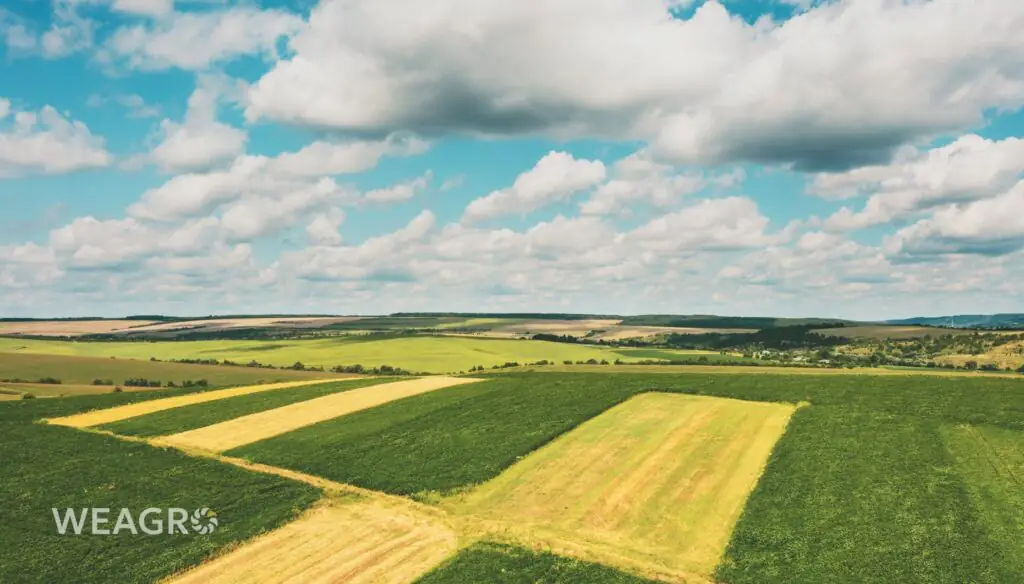
Thus, the opening of the agricultural land market is gradually changing not only investment rules but also the overall structure of the agricultural economy. Two different classes of land-related businesses are forming in the market: investment business focused on capital asset value and rental income, and operational agricultural business working with yield, operational efficiency, and annual cash flow. Their only point of contact is rental relations, but the economic nature of these businesses differs significantly. The investment approach is oriented toward a long horizon and measured by asset value growth, while operational requires quick decisions, liquidity, and adaptability to market risks. Combining these two logics in one entity creates systemic conflicts of interest, increases risks, and essentially contradicts the economic nature of agricultural business. This is why the opening of the land market separates the functions of landowner and agribusiness operator, forming two parallel but interconnected economic models.
Strategic Questions Facing Farmers
Since agricultural production cannot fully finance land acquisition, fundamental questions arise:
- Is it advisable to use bank lending and which instruments are safest?
- Can investors be attracted while maintaining control over the farm?
- Which partnership models are advisable and which carry risks?
- Is every investor beneficial, or are there categories of investors whose cooperation might threaten financial stability and farm control?
- How to optimally combine different funding sources?
- How to build a financial model that will preserve the land bank and ensure operational business stability?
Conclusion
The economic model of financing land acquisition through agricultural production operating profit is financially unfeasible. It demonstrates not only resource insufficiency but also a high level of risk for the farm. Land bank acquisition should be considered as a separate investment project with its own logic, budget, and funding sources. Mixing operational and investment flows creates substantial threats to agribusiness stability and contradicts the nature of farm development.
The next article will examine in detail financing options—from banking products and state programs to private and institutional investors. We will analyze their advantages, risks, and mechanisms for maintaining control over the farm. You will also receive answers to all the questions mentioned above.
The land market is already open, and for many farmers the issue of preserving the land bank is moving from theory to practice. Options exist, but each has consequences for liquidity, lease, and financial stability of the operation. That’s why such decisions are better discussed not alone.
We invite farmers to join the online meeting “Land Bank Preservation Strategy for Farmers After Land Market Opening”, where we’ll discuss real scenarios, working models, and typical mistakes without complex theory.
- February 25, 2026
- 5:00 PM (Kyiv time)
- Online, ZOOM
The meeting is organized by the WEAGRO online service and the Dobrozem marketplace.
Follow the announcements on the social media of WEAGRO and Dobrozem.