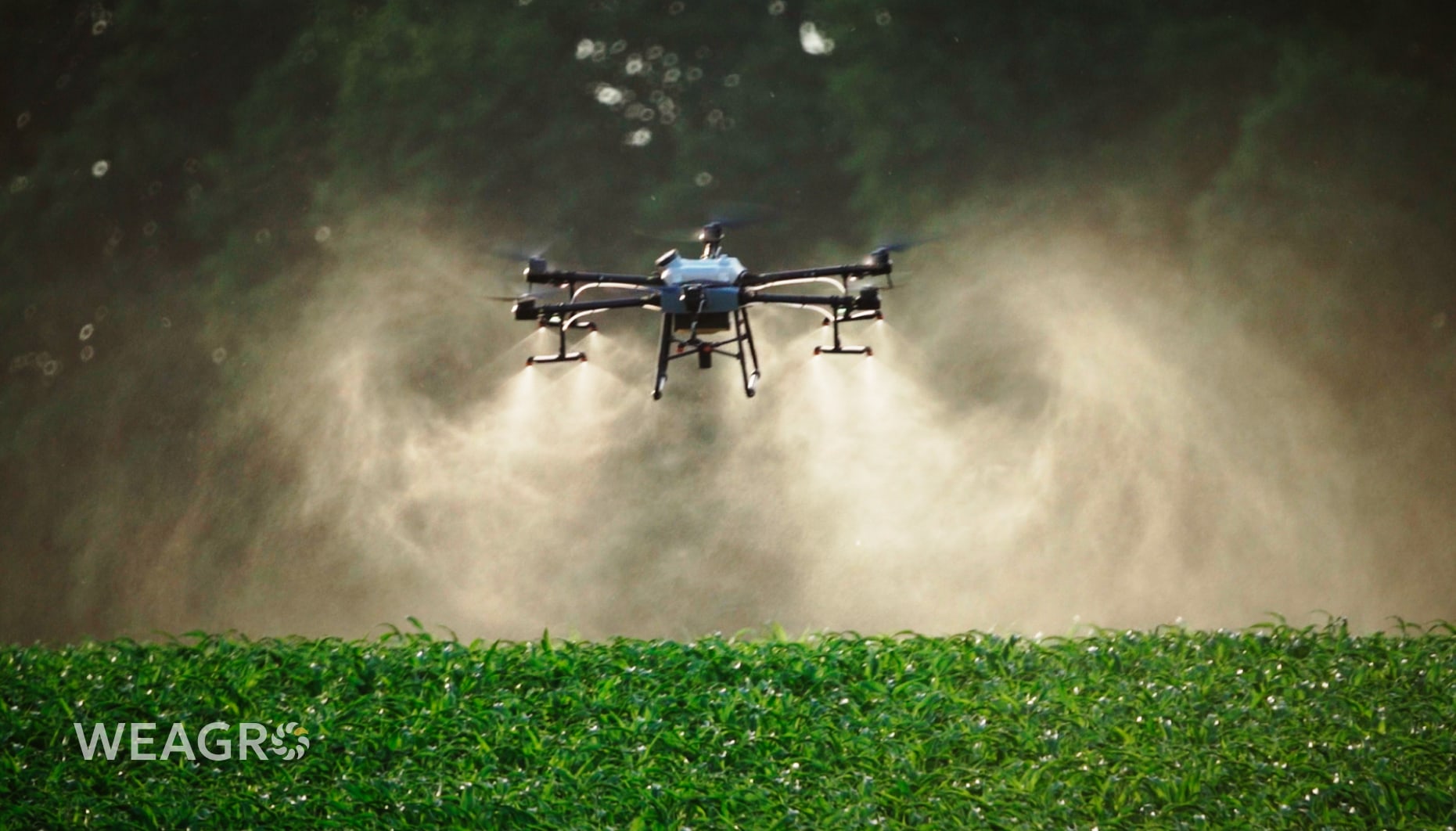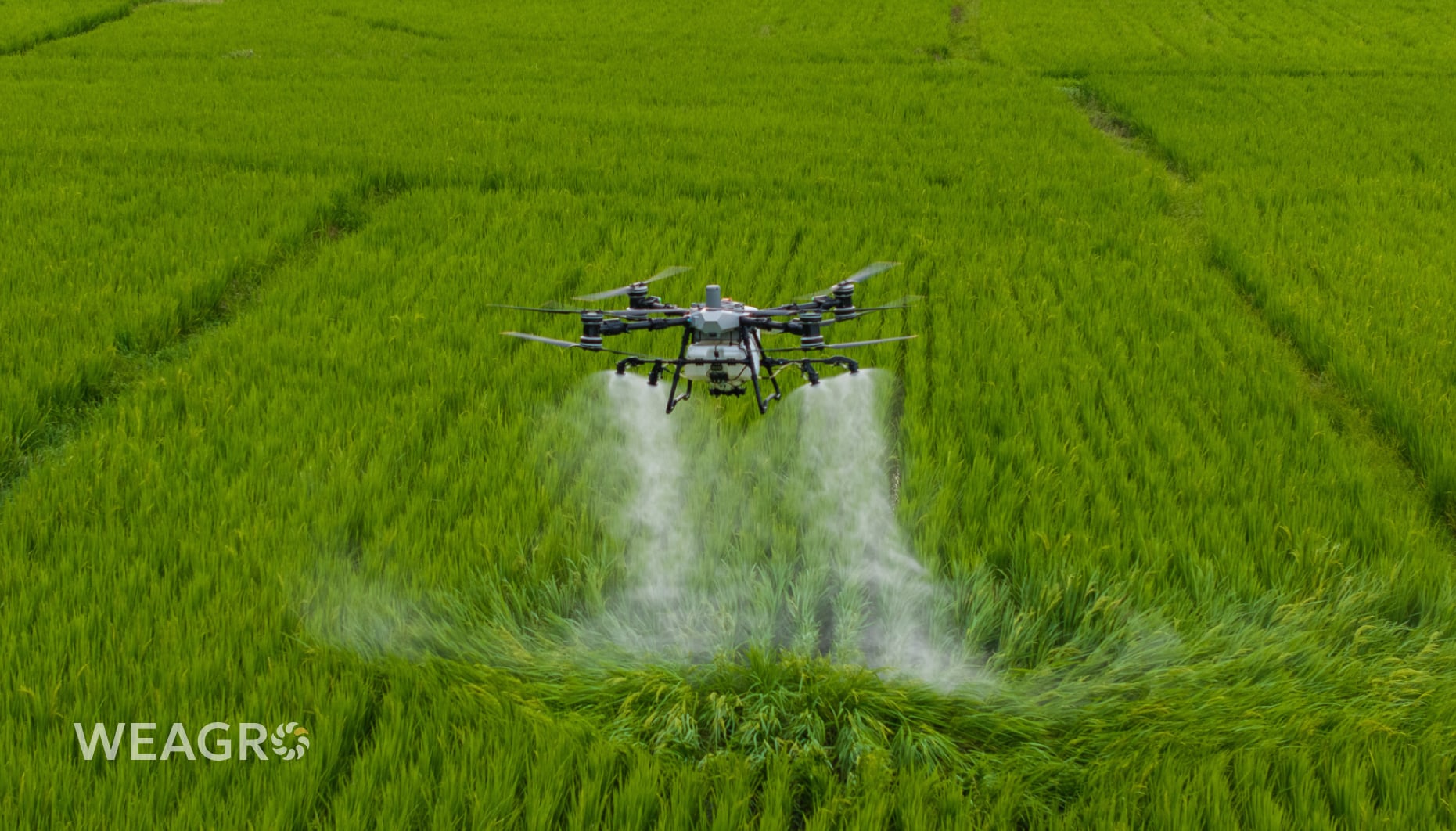
In modern agribusiness, the main advantage is speed of response. While a problem is not yet visually apparent, it is already affecting the yield. This is why traditional field monitoring through walking or equipment inspection often does not deliver results: it is slow and does not provide a complete picture.
Crop monitoring with drones changes the approach. It gives the agronomist the ability to obtain complete information about field condition in a few hours, not days. This is especially important before applying plant protection products, fertilization, or planning field treatment with agricultural drones.
What is crop monitoring with drones
Crop monitoring with drones is the analysis of crop condition using UAVs equipped with cameras that capture changes in plant vegetation. This is not simply aerial photography of a field, but a tool that allows for identifying problem areas before they can be seen from the ground.
The drone collects data on plant condition, after which a field map is generated with clear zone distribution: where the plant is developing normally and where stress is already present. This data becomes the basis for decision-making—from fertilizer application to targeted application of plant protection products with agricultural drones.
How monitoring works: the principle without complex terms
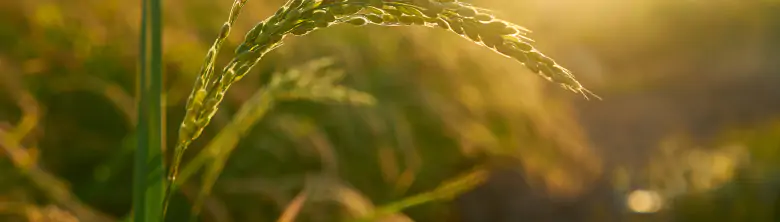
The foundation of the technology is the difference in light reflection by plants. Healthy crops reflect one spectrum, stressed crops another. The drone reads these differences and converts them into understandable maps. NDVI and multispectral cameras are most commonly used. They allow not simply to “see the field from above,” but to understand what exactly is happening with the plant: nutrient deficiency, moisture shortage, or the onset of disease. As a result, the agronomist receives not a general picture, but specific areas that require intervention.
What crop monitoring with drones actually delivers
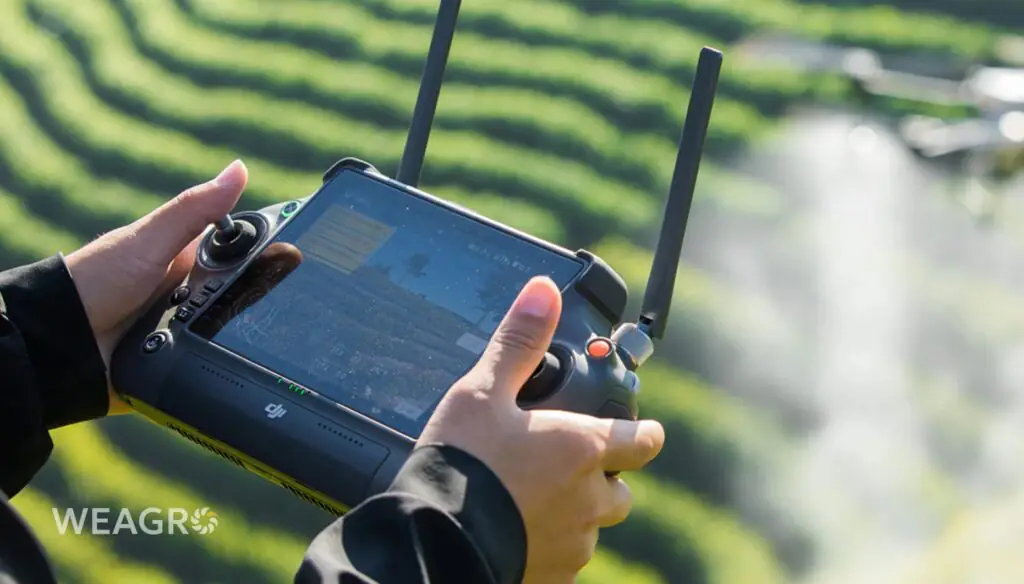
The main value of this technology lies in practical application. It allows for transitioning from blanket treatment to precise decisions.
Main results obtained by the farm:
- Early problem detection
The drone captures plant stress before visible symptoms appear. This provides the opportunity to apply plant protection products or fertilizers on time, rather than when part of the yield is already lost.
- Optimization of plant protection product and fertilizer application
Instead of treating the entire field, a map is generated for targeted application. This directly reduces costs and increases the efficiency of each application.
- Preparation for agricultural drone operations
Monitoring allows for identifying specific areas for treatment, which perfectly combines with agricultural drone application and the concept of precision farming.
Why traditional monitoring does not work
The traditional approach is based on selective field inspection. The agronomist cannot physically assess the entire area with equal precision, especially when dealing with large tracts. The problem is that the field is uneven. Some areas appear normal, while others are already entering stress. And these zones often remain unnoticed until losses become obvious. Drone monitoring closes this gap: it provides a complete picture, not fragments.
How this affects farm economics
Crop monitoring with drones is directly linked to application economics. It not only reduces costs but also helps earn more through preserved yield.
Main economic effects:
- Reduction of plant protection product and fertilizer costs: Targeted application allows for reducing resource use without losing efficiency.
- Reduction of yield losses: Early problem detection means the plant does not have time to lose potential.
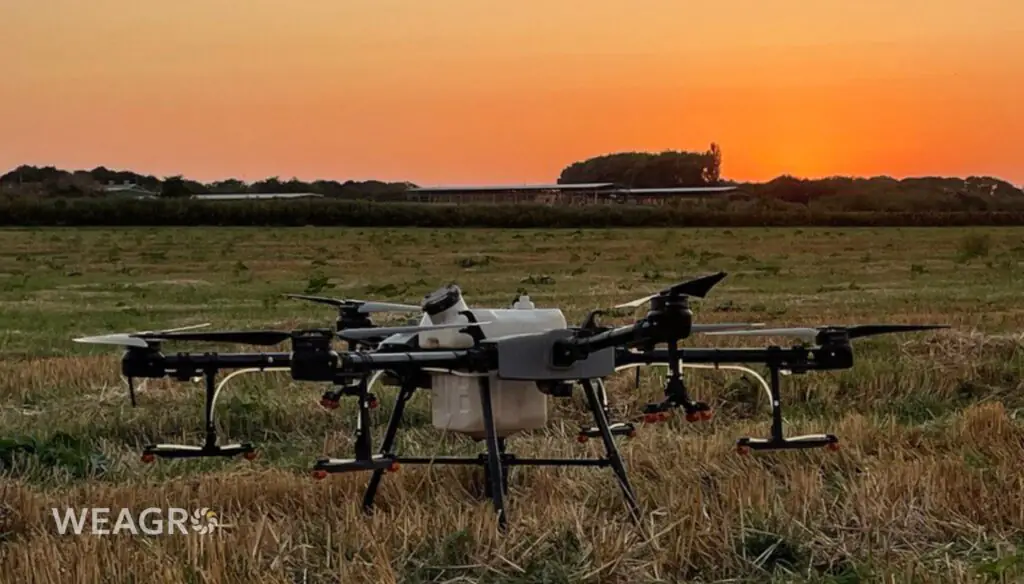
- Increased efficiency of agricultural drone application: The drone operates not “blindly,” but on specific zones, which significantly increases the result per hectare.
Where monitoring delivers maximum results
This technology shows the greatest effect in farms where:
- large areas and complex field structure
- there is a need for precise plant protection product application
- agricultural drone application is used or planned
- speed of response to field changes is important
This is where monitoring becomes not simply an auxiliary tool, but part of the management system.
Limitations worth considering
Crop monitoring with drones is not a universal solution that addresses all tasks. Data must be correctly interpreted, and the process must be properly organized. Weather conditions that can affect survey quality should also be considered.
But these factors do not change the main point: the drone provides information that cannot be obtained by any other method within the same timeframe.
Conclusion
Crop monitoring with drones is a fundamental tool of modern precision farming. It allows for viewing the field as a system, not a set of separate areas, and making decisions based on real data. Combined with plant protection product application by agricultural drones, this technology delivers maximum effect: problems are identified earlier, treatment becomes more precise, and costs are controlled.