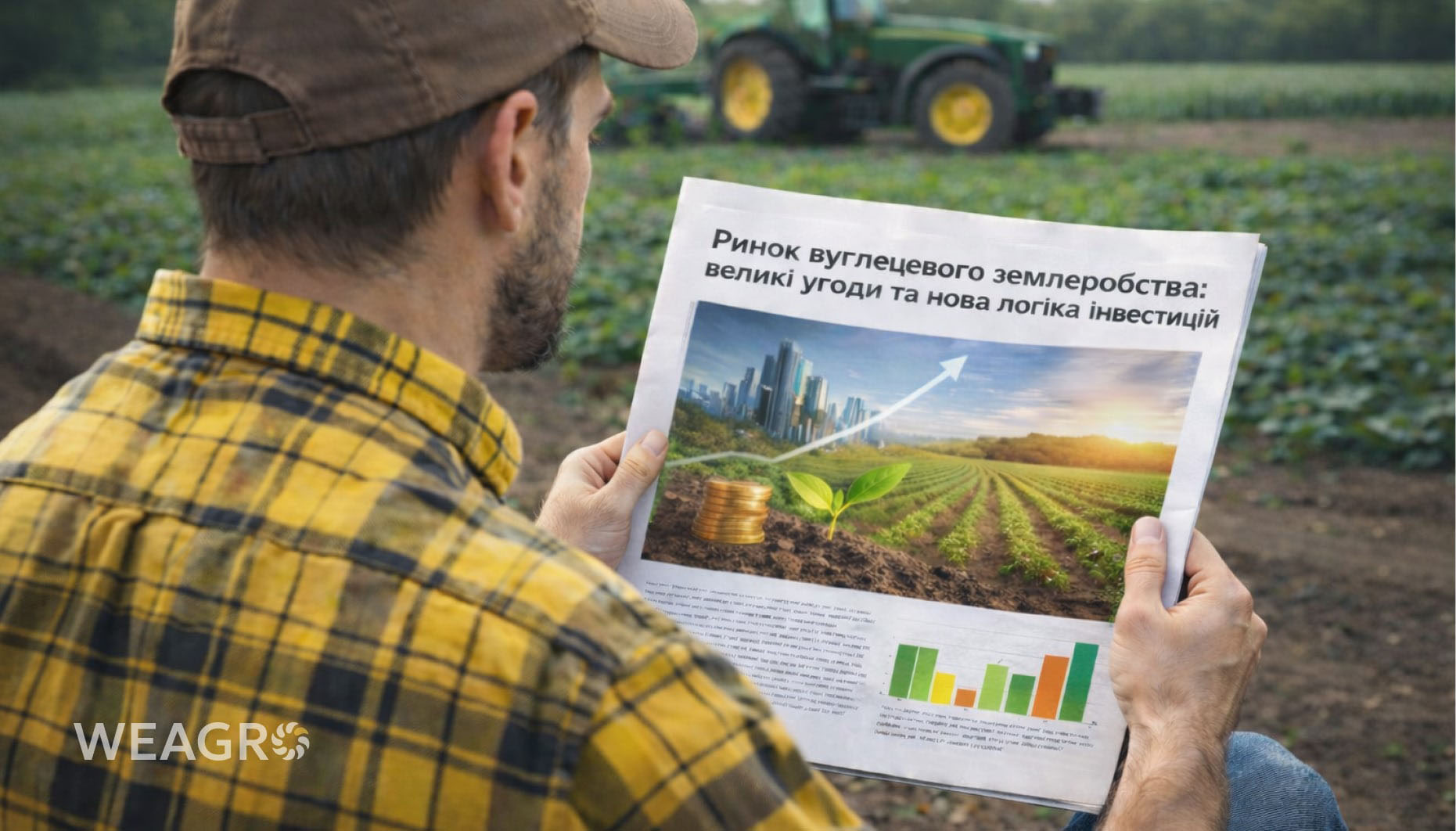
$16 billion market. Dozens of long-term contracts. Hundreds of millions in investments in nature-based climate projects. Over the past year, the carbon market has changed significantly. And with it, the approach to carbon farming has shifted: from experiment to a distinct investment segment.
This column will be somewhat different from previous ones. There are fewer basic explanations and more figures, market signals, and comparisons. Because as of April 2026, the main question is no longer whether there is demand for carbon farming credits, but rather how fast this market is growing. So more facts and figures follow.
The Market Has Grown but Become Much Tougher
The global carbon market has long ceased to be a niche topic. According to the World Bank, carbon pricing mechanisms now cover approximately 28% of global emissions, and in 2024 they generated over $100 billion in budget revenues across various countries. At the same time, the total pool of unused credits on the global market has approached 1 billion tons.
Meanwhile, buyers are increasingly scrutinizing the origin of credits, methodology, data quality, issuance date, and type of climate impact. According to Ecosystem Marketplace, the premium for credits issued within the last five years on the voluntary market rose to 217% in 2024, compared to 53% the year before. Demand is shifting toward projects that actually remove carbon from the atmosphere, rather than merely reducing emissions. And this is precisely why carbon farming projects are beginning to occupy an increasingly prominent position.
Forward Contracts: Selling Credits in Advance
One of the most notable signals of the past year is the growth of long-term forward contracts for purchasing future credits. This means that credits are increasingly being sold in advance, and projects receive financing even before their actual issuance.
According to Quantum Commodity Intelligence, in the second quarter of 2025, the number of publicly announced such long-term deals reached a record of 48 transactions. Already in the third quarter, the record was updated to 65 deals. And in early 2026, Quantum estimated the primary carbon credit sales market at approximately $15.8 billion for 2025, compared to $11.9 billion in 2024. In other words, the market grew noticeably over the year, and a significant portion of this growth was associated with forward contracts.
Until very recently, the main question regarding carbon farming was: are major buyers even willing to purchase such credits? Today, the market is already providing a clear answer.
In June 2025, Agoro Carbon signed a 12-year agreement with Microsoft for 2.6 million carbon credits generated within carbon farming projects. And in January 2026, Microsoft signed an even larger 12-year agreement with Indigo for 2.85 million credits. Reuters estimated the value of this deal at approximately $171–228 million, based on a range of $60–80 per ton of CO₂e. These agreements demonstrate that major buyers are already ready to bet specifically on carbon farming.

Nature-Based Solutions: How the Carbon Removal Segment Is Developing
If you look at Quantum Commodity Intelligence’s monthly reviews of this market overall, it is not growing in a straight line, but its structure is clearly becoming more complex and expanding.
In July 2025, Quantum headlined that Nestlé purchased 1.5 million credits, and Verra dominated in issuance. In September, there were already two Netflix deals in the nature-based solutions segment. In November, the publication reported a 34% increase in the number of deals and the launch of $617 million in funds. In December, activity slowed, but in January 2026, the number of deals in this segment rose to 10. In February, Quantum recorded the lowest level of investment in 14 months, but separately highlighted growth in credit issuance in the carbon farming segment. In March, according to its data, 15 new project developers entered the market.
Investments in Developers: Where Big Money Is Going
Major investments have also begun flowing specifically into carbon farming project developers. One of the most notable examples over the past year is the deal between Mirova and Varaha. In November 2025, Mirova announced a $30 million investment in the Kheti soil carbon project, which Varaha is developing in India. For Mirova, this became the largest carbon investment in its history and simultaneously the first investment in soil-related credits. The project covers the states of Haryana and Punjab and is intended to help over 337,000 smallholder farmers transition to regenerative practices across approximately 675,000 hectares.
This deal demonstrates that major investors are now ready to invest not only in high-tech solutions such as direct air capture, but also in agriculture as a distinct climate asset class.
But Varaha is not the only example. In June 2025, Key Carbon and InSoil announced a €100 million partnership to scale regenerative agriculture across 1 million hectares in Europe; separately, within this collaboration, InSoil received €3.7 million in seed funding. In addition, in autumn 2025, Quantum recorded the launch of three new funds or fund tranches totaling over $800 million in the nature-based carbon removal segment, and in November, another $617 million in new funds. In other words, big money is entering the market not only through purchasing future credits, but also through financing the developers, platforms, and projects themselves.

Standards and Regulation Are Beginning to Catch Up with the Market
Another important signal is institutional. In October 2025, ICVCM approved the first methodologies for sustainable agriculture from CAR and Verra. For Verra, this meant approval of VM0042 Improved Agricultural Land Management, v2.2—one of the key methodologies for carbon projects in agriculture. Verra itself stated at the time that this opens the path to issuing tens of millions of high-quality credits in this segment worldwide. According to the organization’s estimate, approximately 200 projects in the registry under previous versions of VM0042 have a potential of around 126 million tons of emission reductions and carbon removal annually.
The European Union is moving in parallel. In early February 2026, the European Commission announced the launch of the first voluntary certification framework for carbon projects in agriculture in the EU.
But There Is a Bottleneck: Credits Do Not Equal Money
Despite all the strong figures, it is important not to fall into excessive optimism. Growth in the number of deals does not automatically mean quick income for farmers.
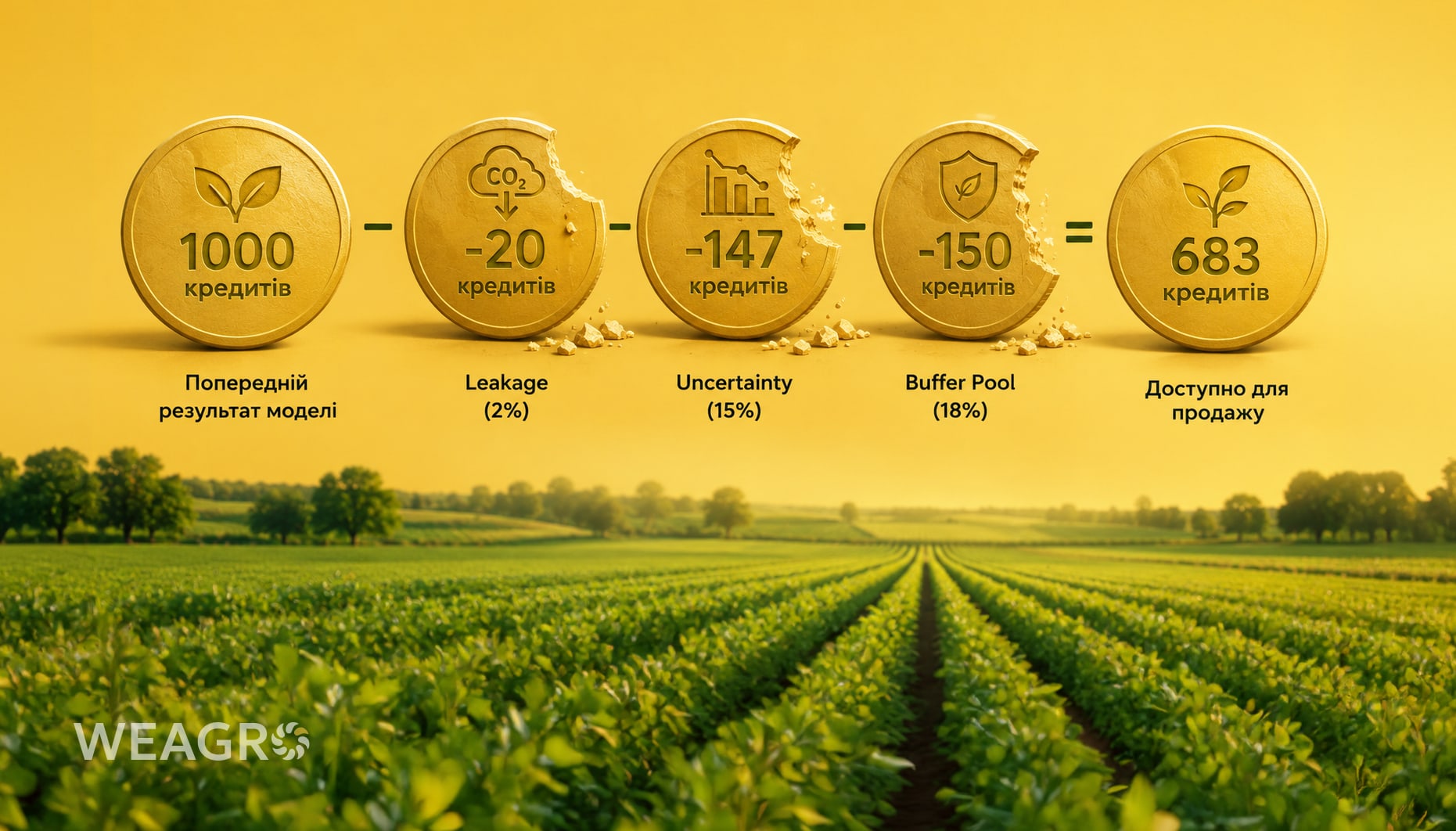
In carbon farming, money typically appears only at the end of a long chain: implementation of practices, data collection, modeling, MRV, verification, issuance, and only then sale of credits. This is precisely why carbon credits and actual cash flow are not the same thing. And this is why the market is becoming tougher on transparency, data quality, and project structure. Buyers do not want to purchase uncertainty. And farmers do not want to work for years without a clear monetization logic.
In fact, the new market standard sounds like this: payment is not for the mere fact of regenerative practices, but for proven and verified climate results.
What This Means for Ukraine
For Ukraine, the picture looks quite clear. First, demand for credits from carbon farming projects truly exists, and this has already been confirmed by major long-term contracts. Second, international standards are beginning to better adapt to agricultural land management practices. Third, the EU is already forming its own certification system for carbon farming projects.
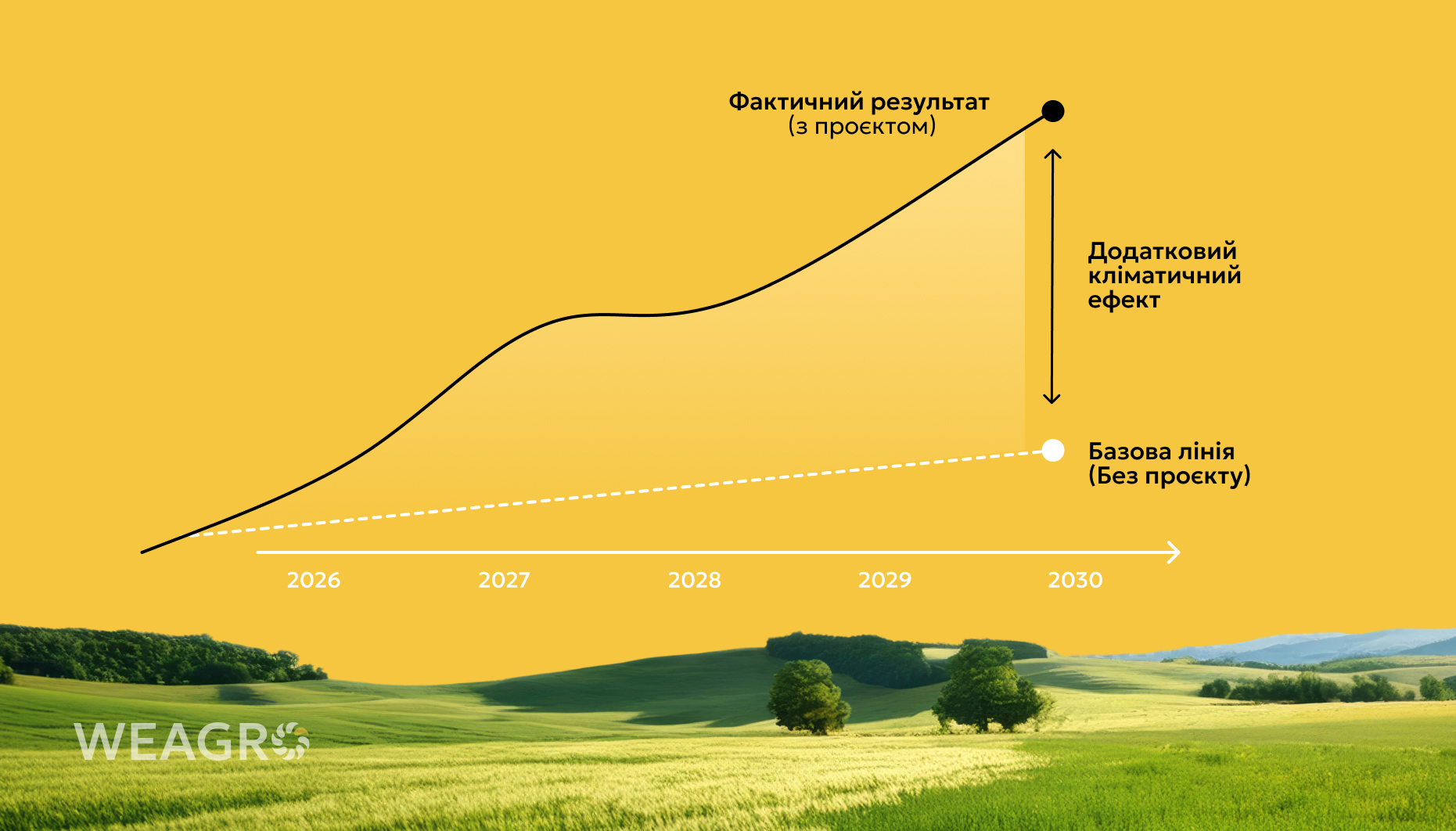
But this also means a new entry threshold. Simply transitioning to regenerative practices is no longer sufficient. Data, traceability, a monitoring, reporting, and verification (MRV) system, a clear baseline, quality documentation, and the ability to pass verification are required—so that the product is understandable not only to the farmer or developer, but also to the international buyer.
Sources: World Bank; Ecosystem Marketplace; Quantum Commodity Intelligence; Reuters; Mirova, Verra; European Commission.
What’s Next?
Carbon projects often refer to a “baseline” or baseline scenario—but what does this actually mean? In the next column, we will examine how the baseline scenario is formed, what requirements are imposed on it, and why it is the foundation for calculating carbon credits.
Together we are building a sustainable future for Ukraine’s agribusiness!