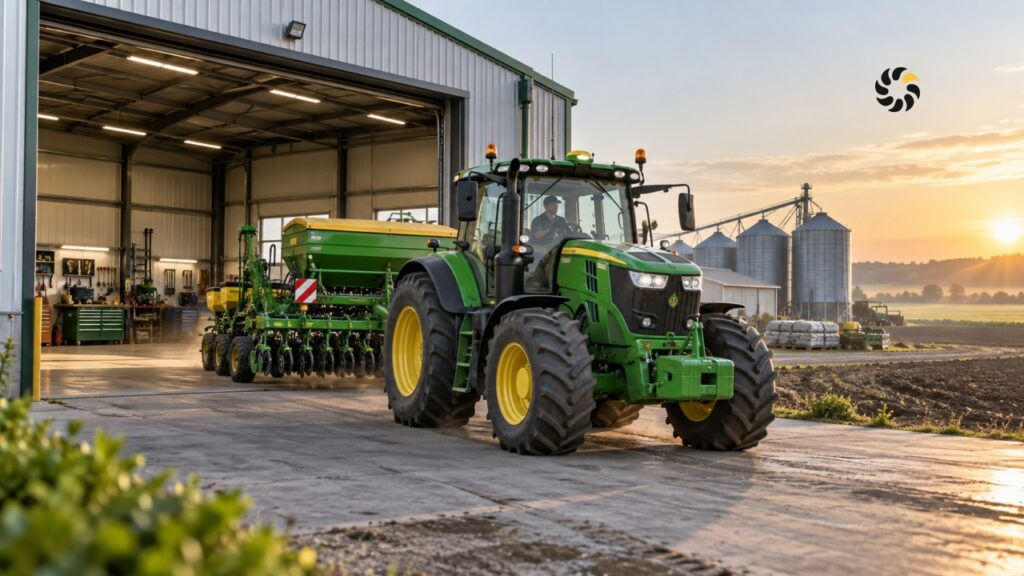
Preparation of agricultural machinery for winter begins after the completion of the last field operations. If malfunctions are postponed until February or March, the farm will face a short repair window, an urgent search for parts, and a large one-time load on the budget. A shortage of a required item during this period can delay the machine’s entry into the field.
Winter machinery repair is best structured as a managed cycle: diagnostics, deficiency list, priority, specification, compatibility check, supplier comparison, budget, procurement, and readiness control. Such a system complements the farm’s preparation for the autumn sowing season and makes it possible to distribute work before the start of the new season.

Preparation of agricultural machinery for winter begins with a deficiency assessment
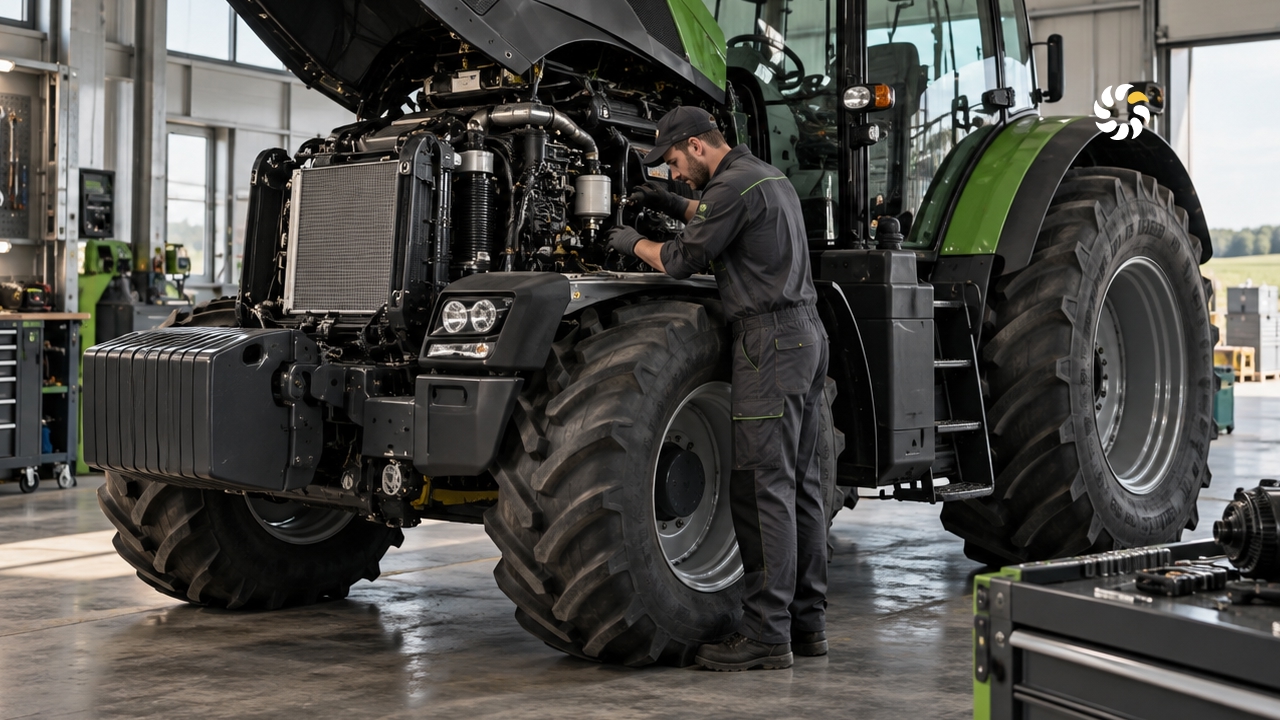
Ordering based on the principle “we replaced this part last year, let’s buy another one” creates a risk of excess inventory. First, the machine is cleaned, engine hours are recorded, and an inspection is performed according to its design, the manufacturer’s regulations, and the actual load.
The list of control points differs for self-propelled and trailed equipment. Depending on the machine, the following are checked:
- engine, transmission, fuel system, and hydraulics;
- electrical equipment, cooling system, and control tools;
- chassis, tires, and fasteners;
- bearings, belts, chains, and drives;
- working elements, frames, connections, and attachments;
- filters, oil, technical fluids, and consumables.
Tractors, combines, seeders, sprayers, and tillage implements have their own inspection checklists. The fault report records the assembly, symptom, wear, inspection, required work, part, and deadline. A verbal list does not provide a basis for an estimate.

How should repairs be prioritized?
Items are evaluated based on the consequences of failure and the machine’s first operation date:
- A, critical – the machine will not perform the operation or further operation will worsen the breakdown;
- B, before the start of the season – the unit is working, but wear requires intervention before the planned load;
- C, planned – work is performed according to regulations and confirmed condition;
- D, non-critical – the defect does not affect the next field operation or the safety of use.
The farm has two tractors, a combine, a seeder, a sprayer, and two tillage units. After the inspection, the work was distributed as follows:
| Machine | Unit or work | Priority | Required item | Deadline | Estimated cost |
| Tractor No. 1 | Hydraulic repair | A | Repair kit, seals | December | 140,000 UAH |
| Seeder | Worn seeding elements | A | Set of working elements | January | 160,000 UAH |
| Sprayer | Pump and nozzles | B | Repair kit, nozzles | February | 90,000 UAH |
| Tractor No. 2 | Maintenance by operating hours | B | Filters, fluids, belts | January | 140,000 UAH |
| Combine | Planned drive inspection | C | Bearings, belts | March | 110,000 UAH |
The seeder and the tractor for early sowing have a shorter deadline than the combine. The sequence is checked against the technological calendar.
How to compile an accurate spare parts list for agricultural machinery?
Spare parts for agricultural machinery are entered into the specification after defects are confirmed. Record the machine model and year, serial number or VIN/PIN, catalog number, quantity, analogs, supplier, price, warranty, delivery, and date of need.
Selecting by model name alone is risky. Within one series, configurations, unit modifications, and production years may differ. Official manufacturer catalogs also use the model, catalog number, or PIN to search for parts. Before paying for an expensive unit, the mechanic verifies the OEM or catalog number with the specific machine and obtains written confirmation of compatibility from the seller.
A separate column indicates the basis for procurement: deficiency assessment, scheduled maintenance of agricultural machinery, or safety stock. Such a record helps remove duplicates and items added without a verified need.
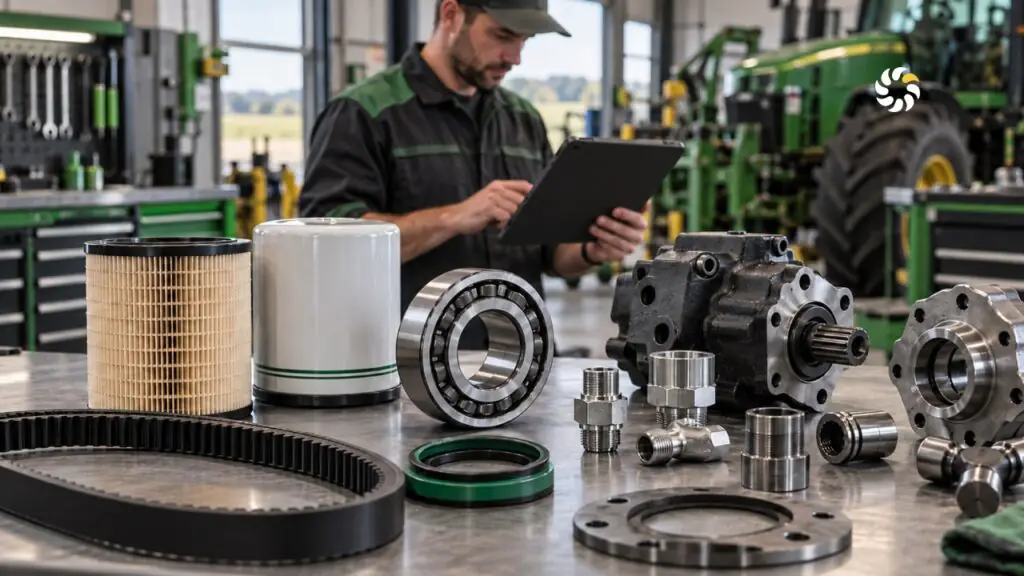
Original or analog: how to evaluate the total cost
The purchase price shows only part of the costs. The following formula is used for comparison:
Total cost of the solution = part + delivery + installation + related materials + risk of repeated replacement + possible downtime.
Hypothetical option A costs 12,000 UAH, option B costs 8,000 UAH. The difference of 4,000 UAH requires an assessment of service life, warranty, delivery time, and consequences of failure. If replacement takes several hours of service work and a breakdown during sowing stops the tractor, a repeated repair may exceed the initial difference.
For a filter, bearing, transmission element, and electronic module, the criteria differ. The decision depends on the criticality of the unit, expected load, confirmed manufacturer characteristics, and service availability. For each option, it is worth recording the arguments to compare the forecast with the actual service life next off-season.
How to compare suppliers and form a safety stock?
Offers are compiled into one table according to the same specification. In addition to the price, check the exact article number, manufacturer, origin, compatibility, actual availability, delivery time, warranty, returns, documents, delivery, and payment terms. The phrase “fits your model” requires confirmation by catalog number or serial range.
The stock is formed according to three groups:
- Regular consumables are forecasted based on engine hours, regulations, and data from previous seasons.
- Critical parts with long lead times are evaluated based on the probability of failure and losses from downtime.
- Expensive highly specialized components are checked especially carefully, as the stock freezes working capital and creates a risk of unused residue.
A reserve makes sense when the expected losses from the absence of an item are higher than the cost of its storage and the risk of write-off. Spare parts for agricultural machinery with a short delivery time can be left in the order plan, setting a final payment date.
How to compile a budget for agricultural machinery repair?
The deficiency list is converted into an estimate: spare parts, consumables, lubricants, technical fluids, labor, service, logistics, additional operations, and a reserve. For a fleet of seven machines, a hypothetical plan looks like this:
| Item | Plan |
| Repair of two tractors | 280,000 UAH |
| Seeder | 160,000 UAH |
| Sprayer | 90,000 UAH |
| Two units of tillage equipment | 120,000 UAH |
| Stock of consumables | 100,000 UAH |
| Service and labor, including the combine | 130,000 UAH |
| Reserve for confirmed additional work | 70,000 UAH |
| Total | 950,000 UAH |
The total requirement does not equal the payment for one month. In November, the farm orders critical and scarce items; in December, it repairs the first tractor; in January, the seeder and the second tractor; in February, it completes the sprayer and early-cycle machines. The combine gets a separate deadline according to its date of use.
The calendar allows for comparing offers and distributing the load. The methodology used to plan expenses for agricultural resources is also applicable to repair procurement.

How to avoid a cash gap due to agricultural machinery repair?
In winter, the farm simultaneously pays for repairs, seeds, fertilizers, crop protection products, fuel, salaries, and rent. Therefore, the estimate is included in the general financial planning of the agribusiness and monthly cash flow.
The calculation sequence includes:
- Total amount of repairs and reserve.
- Critical procurements and deadlines.
- Delivery times for parts.
- Distribution of orders and payments by month.
- Other expenses and the farm’s income forecast.
- Minimum liquidity balance.
- Months with a potential funds deficit.
For example, 950,000 UAH was distributed as follows: November 260,000 UAH, December 240,000 UAH, January 270,000 UAH, February 180,000 UAH. If in January, together with agricultural resources, 1.8 million UAH is needed with an available balance of 1.5 million UAH, the deficit equals 300,000 UAH.
First, check the possibility of postponing category C and D work, agreeing on payment with the supplier, or changing the order sequence. Additional scenarios are discussed in the material if there is not enough money for sowing. When procurement is needed before revenue is received, you can evaluate financial solutions for agribusiness and compare available terms with the payment calendar.
Winter repair cycle checklist
Before starting work, the responsible specialist checks the entire chain:
- compile a machinery registry and record engine hours;
- clean the machines and conduct diagnostics;
- prepare a deficiency list;
- assign categories A, B, C, or D to repairs;
- determine the first operation of each machine in 2027;
- formulate part specifications;
- verify OEM, catalog numbers, and compatibility;
- check warehouse balances;
- compare suppliers and delivery times;
- calculate the total cost of repair;
- provide a reserve for confirmed additional work;
- distribute procurements and payments by month;
- align the plan with the general cash flow;
- set a deadline for each repair;
- conduct a test run and record the result;
- record actual costs and the service life of replaced parts.
The repair history gradually forms the farm’s database. After several seasons, it shows costs by model, operating hours, and units, helps refine safety stock, and compares the actual service life of originals and analogs.
Preparation of agricultural machinery for winter concludes with a work plan, specification, and procurement calendar. Repairing agricultural machinery after a deficiency assessment reduces the number of urgent orders, compatibility errors, and excess warehouse inventory.
The cost of a part is evaluated along with installation, service life, delivery, and possible downtime. A plan based on priorities and months helps prepare the fleet for spring and maintain liquidity.