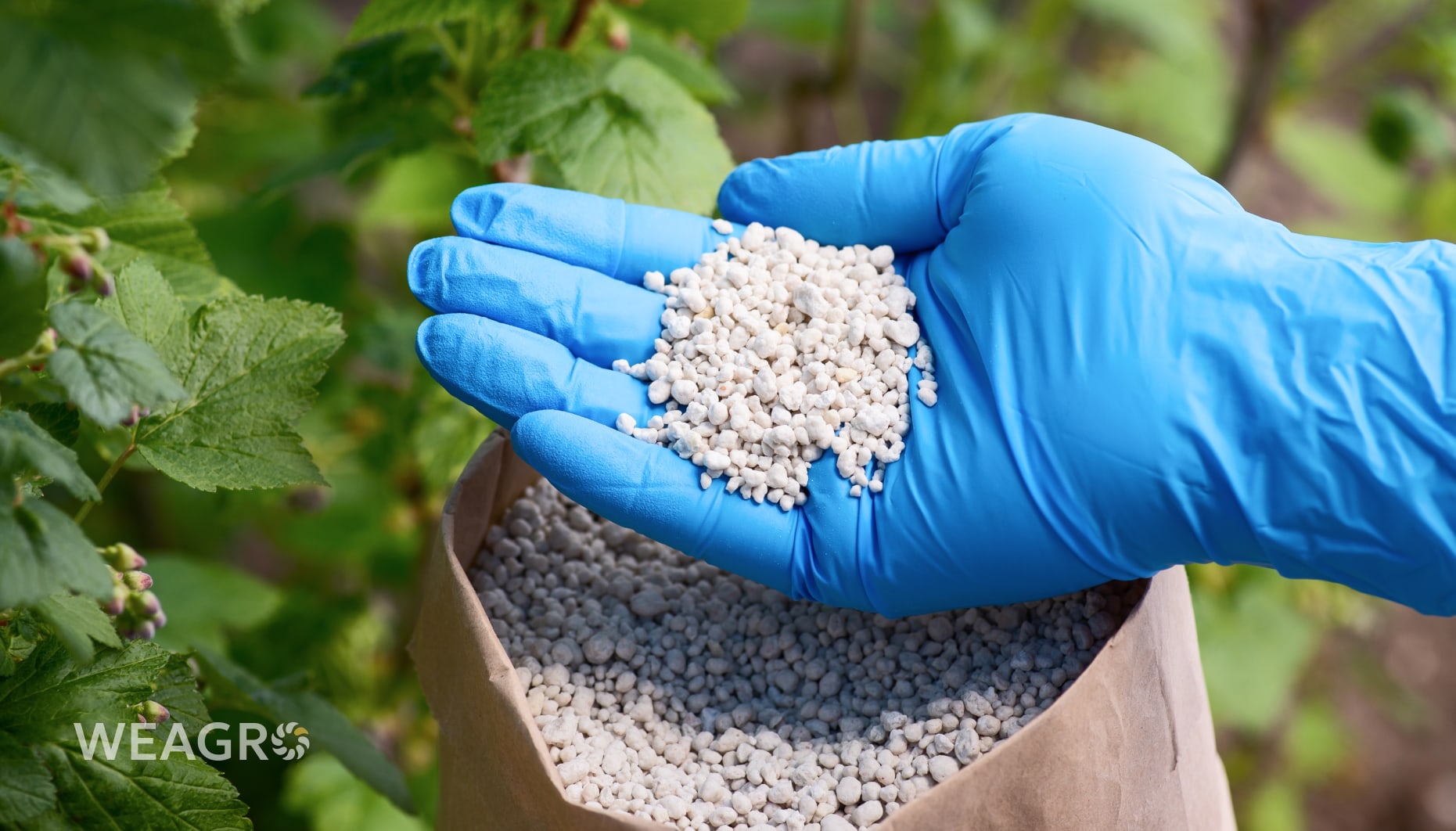
Nitrogen is expensive — losing it is not an option
Nitrogen today is not just a nutrient. It is one of the most expensive investments in the cultivation technology of wheat, corn, rapeseed, soybeans, barley, sunflower, and other crops. Every liter of UAN, every ton of urea, and every kilogram of active ingredient must work for the harvest, not be lost to the air as ammonia.
That is why in countries with a high culture of agriculture, particularly in Canada, farmers have long viewed nitrogen not as “just fertilizer,” but as a resource that must be properly placed, properly protected, and properly synchronized with crop needs. The Canadian approach is very practical: it is not enough to simply apply the nitrogen rate. It is necessary to ensure that this nitrogen remains in the “soil–plant” system and is available to the crop when it truly needs it.
This is especially relevant for Ukrainian farms, where UAN and urea are widely used in nutrition systems for cereals, corn, rapeseed, sunflower, and soybeans. The problem is familiar to many agronomists: nitrogen was applied, rain was expected, but there is no rain. One day, two, five, a week. The soil surface dries out, the wind picks up, the temperature rises, and part of the nitrogen begins to be lost. It is in such situations that the question arises: how to retain nitrogen in the soil and not lose money?
One of the answers is competent work with a urease inhibitor. Not as a “magic additive,” but as a practical tool for insuring nitrogen fertilizers under risky conditions. This is how urease inhibitors should be viewed: they do not replace agronomy, do not cancel the importance of moisture, application method, and timing, but help reduce nitrogen losses after applying UAN or urea.
Why Canadian farmers are so attentive to nitrogen
Canada is a country of vast areas, sharp weather contrasts, and a high cost of mistakes. In the prairies, a farmer may have a short technological window for fertilizer application, an unstable precipitation forecast, wind, dry soil surface, stubble in the field, and the need to quickly cover hundreds or thousands of hectares. Under such conditions, nitrogen nutrition is always a balance between agronomy, weather, equipment, and economics.
Canadian farmers understand well: if nitrogen is applied to the surface but not incorporated into the soil by rain, tillage, or another method, part of it may be lost through ammonia volatilization. This especially concerns urea and the amide portion of UAN. Therefore, the key principle sounds simple: nitrogen must work, not volatilize.
This is the secret: not to always give a higher fertilizer rate, but to preserve what has already been applied. Control of nitrogen losses is control of technology efficiency. And control of technology efficiency is control of profit.

How nitrogen is lost after applying UAN and urea
To understand the value of a urease inhibitor, it is necessary to understand what happens to nitrogen after application.
Urea, or carbamide, contains approximately 46% nitrogen in amide form. UAN also has a significant portion of amide nitrogen. UAN typically contains three forms of nitrogen:
- nitrate form — immediately available to the plant;
- ammonium form — partially available and gradually transitions to nitrate;
- amide form — must undergo transformation through the action of the urease enzyme.
It is the amide form that is most interesting from the standpoint of losses. It does not remain stable on its own. In the soil, there is the enzyme urease, which catalyzes the breakdown of urea. As a result, amide nitrogen transitions to ammonium form, but in the process, ammonia may be formed. If ammonia is not fixed in the soil and conditions favor volatilization, part of the nitrogen is lost to the air.
Simply put: the farmer paid for nitrogen, brought it to the field, applied the fertilizer, but after a few days, part of the investment may simply “go away” in the form of gaseous ammonia. And the more expensive the fertilizers, the more painful these losses.
What is urease and why is it so important
Urease is an enzyme that breaks down urea into ammonia and carbon dioxide. It is present in soil microorganisms, plant residues, bacteria, fungi, and naturally participates in the nitrogen cycle. The enzyme itself is not “bad.” The problem arises when the conversion of amide nitrogen occurs too quickly and does not coincide with the crop’s need or with the conditions for nitrogen fixation in the soil.
The reaction can be described simply:
urea + water → ammonia + carbon dioxide
If sufficient rain occurs after applying urea or UAN and the nitrogen quickly enters the soil, the risk of losses is lower. But if the fertilizer lies on the surface, the soil is warm, the weather is windy, sunny, dry, or there is no rain for a long time, losses can increase.
That is why in Canadian practice, great attention is paid not only to the nitrogen rate, but also to application conditions. Farmers assess whether there will be rain, whether the fertilizer can be incorporated, whether there is stubble on the surface, what the soil temperature is, what the risk of losses is, and whether a nitrogen stabilizer needs to be applied.

Urease inhibitor: how it works
A urease inhibitor is a product that temporarily blocks or suppresses the activity of the urease enzyme in the soil. In the case of NBPT-based products, particularly the U-Guard urease inhibitor, the active ingredient slows the transition of amide nitrogen to ammonium form.
This does not mean that nitrogen “stops forever.” It means that the conversion process becomes slower and more controlled. This reduces the risk of rapid ammonia formation on the soil surface and, accordingly, reduces nitrogen losses through volatilization.
In a practical sense for an agronomist, this sounds like:
- more nitrogen remains in the soil;
- less nitrogen is lost to the air;
- UAN and urea work more efficiently;
- the farmer has more chances to wait for rain;
- the plant receives nitrogen more stably;
- fertilizer costs are better protected.
The U-Guard urease inhibitor is not “additional fertilizer.” It does not add new nitrogen to the system. Its task is different: to help preserve the nitrogen that the farmer has already purchased and already applied.
Why 7–10 days without rain can be critical
One of the most common situations in the field: UAN or urea was applied, but there is no rain. The forecast promised precipitation, but it bypassed the field. Then another day is dry, then wind, then sun, then the temperature rises. Under such conditions, the farmer is essentially waiting: either rain will incorporate the nitrogen into the soil, or part of the nitrogen will be lost.
This is where the urease inhibitor works as simple insurance for fertilizer investments. It helps reduce nitrogen losses after application and can provide approximately 7–10 days of protection without rain. This does not mean that weather can be completely ignored. But it does mean that the farmer has more time for the nitrogen to remain in a more accessible and less risky form until rain occurs or the fertilizer enters the soil.
The formula is simple:
no rain after application → the inhibitor will provide backup
Or even shorter:
UAN must work, not volatilize.
When nitrogen losses are highest
Nitrogen losses through ammonia volatilization can increase under certain conditions. The most risky situations:
- surface application of urea without incorporation;
- surface application of UAN under dry conditions;
- absence of rain after application;
- warm soil;
- windy weather;
- active solar radiation;
- dry soil surface;
- large amount of plant residues on the surface;
- high nitrogen doses;
- application during a period when the crop cannot yet quickly use nitrogen;
- delay between application and precipitation.
Under such conditions, a urease inhibitor is most justified. If the fertilizer is immediately incorporated into the soil, if sufficient rain occurs quickly after application, if the temperature is not high and the risk of volatilization is low, the effect of the inhibitor may be less noticeable. This is normal agronomic logic: the inhibitor is most needed where there is a risk of losses.
Canadian secret #1: not just apply nitrogen, but protect it
One of the key approaches of Canadian farmers is to calculate not only the application rate, but also the efficiency of nitrogen use. You can apply a lot but lose part of it. Or you can apply more precisely, protect it better, and achieve higher efficiency of every kilogram of N.
That is why in modern nutrition systems, there is increasingly talk not only about “how much nitrogen to give,” but about:
- in what form is the nitrogen;
- when will it be available to the plant;
- how quickly can it be lost;
- will there be rain after application;
- can the fertilizer be applied closer to the crop’s need;
- does the nitrogen need to be stabilized;
- will the additional insurance pay off.
The inhibitor in this logic looks very natural: it is a tool not to “sell another product,” but to help the fertilizer that has already been purchased work more efficiently.
Canadian secret #2: rain after application is not a guarantee, but a risk factor
Many farmers plan to apply urea or UAN “before rain.” This is correct logic, but in the real field, the forecast does not always work. Especially in recent years, when precipitation has become localized: one field received 8 mm, another — 1 mm, and a third field remained dry.
Canadian farmers know this problem well. They work with large areas and cannot always wait for the perfect window. Therefore, under conditions when nitrogen is applied to the surface and rain is uncertain, a urease inhibitor becomes agronomic insurance.
Its task is not to replace rain. Its task is to help preserve nitrogen until moisture can move it into the soil.
Short message for the farm:
No rain after application? Do not risk nitrogen — stabilize it.
Canadian secret #3: UAN requires the same attention as urea
Sometimes farmers believe that the problem of losses concerns only urea. In fact, UAN also has an amide form of nitrogen. In UAN, part of the nitrogen is available faster, part transitions gradually, but the amide fraction also undergoes the urease reaction.
UAN contains three forms of nitrogen:
- nitrate — quickly available;
- ammonium — relatively more stable;
- amide — the one that must be converted by urease.
It is the amide form in UAN that creates the risk of losses through ammonia, especially if UAN is applied to the surface, without sufficient moisture, in warm and windy weather. Therefore, the phrase “expensive UAN must work, not volatilize” is not a marketing phrase, but real agronomic logic.
A urease inhibitor increases the efficiency of UAN use because it helps reduce nitrogen losses after application. This is especially important in topdressing winter wheat, rapeseed, corn, and other crops, where every kilogram of nitrogen affects yield, protein, biomass, grain filling, or formation of productive stand.
Canadian secret #4: nitrogen stabilization is not a trend, but economics
When nitrogen was cheaper, part of the losses was perceived less painfully. Today the situation is different. Fertilizers are expensive, logistics is expensive, technologies are expensive, and the weather is less predictable. Therefore, losing nitrogen is essentially losing money.
A urease inhibitor is not an expense “for show.” It is a way to protect the investment in nitrogen nutrition. If a farmer applied expensive UAN or urea and then encountered 7–10 days without rain, nitrogen stabilization can be the factor that reduces losses and maintains topdressing efficiency.
Hence the simple logic:
control of losses = control of profit
Not every field requires the same solution. But if conditions favor ammonia volatilization, a urease inhibitor becomes a very practical tool.
U-Guard: natural insurance for UAN and urea
U-Guard is an NBPT-based urease inhibitor that blocks the activity of the urease enzyme in the soil and slows the transition of amide nitrogen to ammonium form. This reduces the risk of nitrogen losses in the form of ammonia after applying UAN or urea.
Its advantages should be formulated simply and agronomically:
- U-Guard reduces nitrogen losses after application;
- helps retain more nitrogen in the soil;
- provides backup if there is no rain after application;
- increases the efficiency of expensive UAN and urea;
- expands the window of nitrogen use by the crop;
- helps stabilize the amide form of nitrogen;
- does not add unnecessary stress to the technology;
- is simple insurance for fertilizer investments.
Important: U-Guard does not replace competent application. If there is an opportunity to apply fertilizer before reliable rain, incorporate urea into the soil, or work under optimal conditions — this is always good. But when conditions are not ideal, a urease inhibitor helps make the technology safer.
How a urease inhibitor works with UAN
UAN is a convenient liquid nitrogen fertilizer that is easy to use in topdressing. But its efficiency depends on how and when it is applied. If UAN is applied to the surface and there is no rain after application, the amide portion of nitrogen gradually begins to transform under the action of urease. At this stage, ammonia losses are possible.
A urease inhibitor slows this process. It does not allow amide nitrogen to transition too quickly to ammonium form on the surface, where the risk of losses is higher. Thanks to this, UAN remains in a more stable state longer, and the crop has more chances to use the applied nitrogen.
For the farm, this means:
UAN must work in the field, not be lost to the air.
How a urease inhibitor works with urea
Urea is a very concentrated nitrogen fertilizer. It is valued for its high nitrogen content, logistics convenience, and wide application possibilities. But it is urea that is very sensitive to losses through ammonia volatilization if it remains on the soil surface without incorporation or rain.
When a urea granule dissolves, the process of urea hydrolysis begins. Urease accelerates this process, and if conditions favor volatilization, part of the nitrogen may be lost.
U-Guard slows the work of urease, so the nitrogen transition occurs more controllably. This gives the farmer more time for rain or moisture to move the nitrogen into the soil, where it will be better retained and gradually used by the crop.
In short:
Preserve nitrogen — get the harvest.
When a urease inhibitor is especially appropriate
A urease inhibitor should be considered primarily when the risk of nitrogen losses is high. The most practical situations:
- UAN application without guaranteed rain;
- urea application to the surface;
- spring topdressing of winter wheat;
- rapeseed topdressing;
- nitrogen application for corn;
- work on stubble or plant residues;
- dry soil surface;
- warm and windy weather;
- expensive nitrogen and high application rates;
- need to extend nitrogen availability for the crop;
- inability to quickly incorporate fertilizer into the soil.
Under such conditions, a urease inhibitor works as agronomic insurance: it does not perform miracles, but helps preserve what has already been applied.
When a urease inhibitor may be less needed
To make the article balanced, it is important to say honestly: a urease inhibitor does not always give an equally noticeable effect. If the fertilizer is quickly incorporated into the soil, if sufficient rain occurred after application, if the temperature is low and the risk of volatilization is minimal, the economic effect may be smaller.
Therefore, the correct logic is: do not apply the inhibitor “blindly,” but assess the risk.
Ask yourself a few questions:
- Will there be rain in the coming days?
- Is the nitrogen applied to the surface?
- Is there stubble or plant residues in the field?
- Is the soil warm?
- Is wind and sun expected?
- Is the UAN or urea rate high?
- Is the cost of a mistake high?
If most answers are “yes,” a urease inhibitor becomes a very logical solution.
U-Guard application rates
Recommended application rates:
- 1.2–1.4 L U-Guard per 1000 L UAN 28–32%;
- 2.5–3.0 L U-Guard per 1 ton of urea.
These rates help evenly treat the fertilizer and ensure the action of the urease inhibitor. It is important to follow recommendations for mixing, uniformity of coverage, and application technique. If the product is applied with UAN, quality mixing in the tank must be ensured. If urea is treated, it is important to evenly apply the product to the granule.
Practical application schemes
Scheme 1. UAN on winter wheat in spring
Spring topdressing of winter wheat is often carried out under unstable weather conditions. The field may still be cool, but the surface dries out quickly. The rain forecast is unstable, equipment is working over a large area, and there is no guarantee that precipitation will be timely.
In such a situation, an inhibitor in UAN helps reduce the risk of nitrogen losses. This is especially important if the farm is working for high yield and protein, and nitrogen nutrition must support tillering, stem elongation, ear formation, and grain filling.
Scheme 2. Urea for corn
Corn has a high demand for nitrogen, but does not use it all at once. If urea is applied to the surface and there is insufficient moisture, part of the nitrogen may be lost before the crop actively begins to consume it.
The inhibitor helps slow the conversion of the amide form, reduce ammonia losses, and retain more nitrogen in the system. This is important in fields with a dry surface, stubble, high temperature, or unstable precipitation.
Scheme 3. UAN on rapeseed
Rapeseed is a crop with a high nitrogen requirement, especially in spring. If UAN topdressing is carried out under conditions of loss risk, a urease inhibitor can be a useful tool for nitrogen stabilization.
For rapeseed, it is important not only to apply a sufficient rate, but also to ensure gradual nitrogen availability during critical growth phases. The inhibitor helps reduce losses and maintain the efficiency of expensive nitrogen nutrition.
Scheme 4. UAN or urea under drought conditions
Drought is one of the main risk factors. When the soil is dry, the fertilizer remains on the surface longer, and nitrogen conversion processes may occur at a time when the crop is not able to use it effectively.
Under such conditions, a urease inhibitor is not an “additional option,” but a risk management tool. It helps buy time and retain more nitrogen until moisture activates crop nutrition.
Why a urease inhibitor does not harm soil microflora

An important point: urease inhibitors do not sterilize the soil and do not “kill” the microflora. The task of inhibitors is to temporarily slow the activity of the urease enzyme to reduce the rate of amide nitrogen conversion. After the period of action ends, nitrogen cycle processes continue naturally.
This is important for farms working with soil health, minimum tillage, cover crops, or organic matter. A urease inhibitor is not a replacement for living soil, but a tool for more precise nitrogen nutrition management.
Economics of the issue: why “fewer losses” means “more results”
A farmer does not just buy a ton of urea or a thousand liters of UAN. He buys yield potential. If part of the nitrogen is lost, the farmer pays for what the crop did not use. Therefore, it is more correct to calculate not only the price of fertilizer, but also the cost of losses.
Imagine a simple situation: fertilizer was applied, but there is no rain. Part of the nitrogen is lost. To compensate for this, the farmer will have to either accept lower nutrition efficiency or think about additional application. Both options cost money.
A urease inhibitor helps reduce this risk. That is why the message “protect your fertilizer costs” sounds absolutely logical. This is not an exaggeration, but the essence of the technology.
Short messages for the farmer
- UAN must work, not volatilize.
- Preserve nitrogen — get the harvest.
- Fewer losses — more results.
- Urease inhibitors keep nitrogen where it is needed.
- Control of losses = control of profit.
- Expensive UAN? Preserve every kilogram of N.
- No rain after application? A urease inhibitor will provide backup.
- Do not risk — stabilize nitrogen.
- Work smart with UAN.
- Protect your fertilizer costs.
Common mistakes when working with nitrogen
Mistake 1. Apply urea to the surface and just wait
If there is no rain after application, urea may lose nitrogen through ammonia volatilization. Waiting is not a strategy. It is necessary to either plan application before reliable rain, or incorporate the fertilizer, or use a urease inhibitor.
Mistake 2. Think that UAN has no risk of losses
UAN has an amide form of nitrogen, so it can also lose part of the nitrogen through the urease reaction. The risk is lower or higher depending on conditions, but it should not be completely ignored.
Mistake 3. Evaluate only the nitrogen rate, not its efficiency
You can apply a large rate but use it inefficiently. Much more important is how much nitrogen will actually remain available to the crop.
Mistake 4. Not consider the weather
Temperature, wind, moisture, sun, and rain after application determine how quickly nitrogen will transition between forms and how high the losses will be.
Mistake 5. Not calculate the economics of losses
If nitrogen is expensive, losses of even part of the applied rate can be significant. A urease inhibitor is not an expense for the sake of expense, but a way to protect investments already made.
Practical algorithm for nitrogen retention in soil
- Assess the nitrogen source: UAN or urea.
- Determine the application method: surface, banded, with incorporation or without.
- Check the rain forecast for the coming days.
- Assess soil and air temperature.
- Consider wind, sun, surface dryness, and plant residues.
- If the risk of losses is high — apply a urease inhibitor.
- For UAN, use U-Guard at a rate of 1.2–1.4 L per 1000 L UAN.
- For urea, use U-Guard at a rate of 2.5–3.0 L per 1 ton of urea.
- Ensure uniform mixing or granule coverage.
- After application, assess crop condition and nutrition efficiency.
Conclusion: the secret of Canadian farmers — not losing what has already been paid for
The secret of nitrogen retention in soil is not in one “magic” technology. It is in a systematic approach: the right nitrogen source, the right application time, the right placement, attention to weather, and use of a urease inhibitor where there is a risk of losses.
Canadian farmers have long thought of nitrogen not only as a rate of N per hectare, but as a resource that needs to be protected. It is this approach that Ukrainian farms should adopt: calculate not only application, but also use efficiency.
U-Guard in this system is simple and logical insurance for UAN and urea. It helps reduce nitrogen losses after application, provides up to 7–10 days of protection without rain, keeps more nitrogen in the soil rather than in the air, and increases the efficiency of expensive nitrogen fertilizers.
At Adler Agro Vision, we always recommend using urease inhibitors together with UAN or urea, because nitrogen today is too expensive to lose through volatilization. In the field, there are not always ideal conditions: after application, there may be no rain, the soil surface dries out quickly, the temperature rises, wind appears — and part of the amide nitrogen begins to transition to ammonia and be lost to the air. A urease inhibitor helps slow this process, reduce nitrogen losses after application, and give the farmer additional time before precipitation. That is why for us, U-Guard is not an “additional option,” but simple and logical insurance for fertilizer investments: more nitrogen remains in the soil, UAN and urea work more efficiently, and the farm achieves better control over the result.
Nitrogen is expensive. Losing it is not an option.