Hybrid seed production is a process of producing planting material where both plant biology and impeccable precision of technologies are important. Unlike commercial production, where the main goal is gross grain yield, in seed production the main goal is genetic purity and vigor of the future plant that will grow from this seed.
Growing such hybrids requires an agronomist not just knowledge, but understanding of the subtle mechanisms of inbred line interaction under specific microclimatic conditions. In Ukrainian conditions, controlled irrigation becomes a key factor in the stability of this process. Let us examine the complete cycle of corn cultivation using hybrids such as Drivia (FAO 260), Dalamer (FAO 280), and Gochi (FAO 360) from Kartal brand as examples.
Genetic Foundation: Parental Lines and the Heterosis Effect
At the foundation of any modern hybrid lie inbred lines—plants that have undergone multiple self-pollinations to achieve homozygosity. By themselves they appear rather weak: short-statured, with small ears and low yield. However, when crossed, the heterosis effect (“hybrid vigor”) occurs. The resulting first-generation seed (F1) demonstrates explosive growth, adaptability, and yield that significantly exceeds the performance of both parents. The Monsanto-bred hybrids we are examining are the result of decades of selecting lines capable of delivering maximum results specifically on Ukrainian chernozem soils.
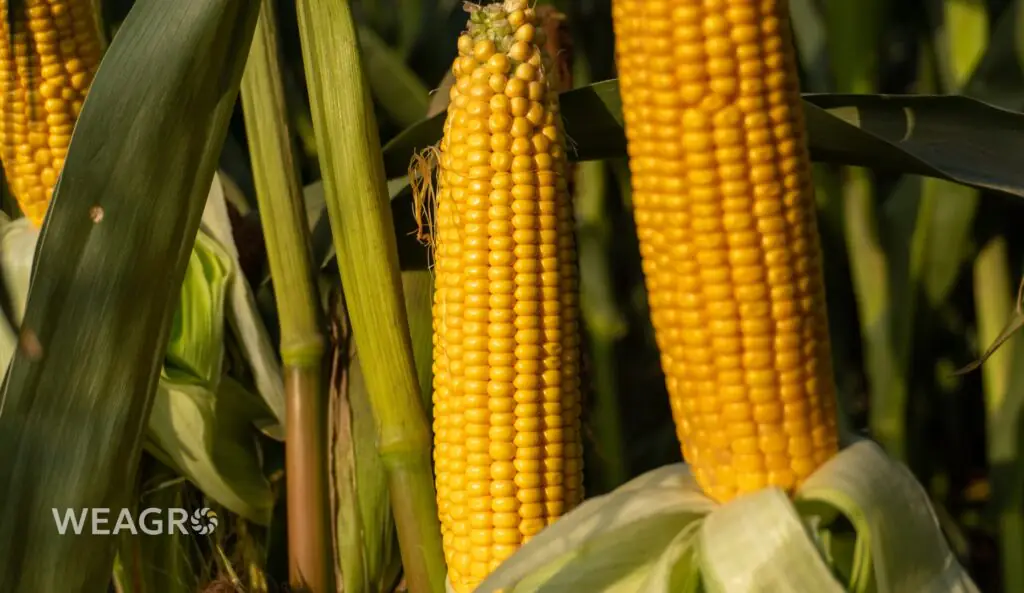
Field Production Technology: From Isolation to Pollination
The process begins with field selection. Spatial isolation is the law. To prevent pollen from a neighboring commercial corn field from compromising genetic purity, the seed production plot must be located at least 200–300 meters away from other plantings.
Planting Scheme and Synchronization
A typical field configuration involves alternating maternal (female) and paternal (male) rows, for example, 4:2 or 6:2. The agronomist’s most challenging task is ensuring synchronous flowering. The paternal line must actively produce pollen precisely when the silks on the maternal line ears are ready for fertilization. If the lines have different vegetation periods, we apply staggered planting of the male line (interval planting) to “extend” the pollination period.
Detasseling
This is the most critical and labor-intensive stage. To prevent the female line from self-pollinating, we must remove all tassels (male inflorescences) from maternal plants before they begin releasing pollen. Today this is done using a combined method: specialized detasseling machines cut or pull out the bulk of tassels, and then work crews go through each row manually, performing “cleanup.” Even 1% of missed tassels can result in rejection of the entire seed batch.
Irrigation: Quality Assurance During Critical Phases
In the Forest-Steppe zone, moisture deficit during flowering is a common occurrence. Without irrigation, pollen can become sterile within hours under the influence of high temperatures and dry winds.
- Tasseling and Flowering Phase: The most water-intensive period. Moisture ensures tissue turgor and pollen longevity.
- Grain Filling: Adequate water under irrigation allows obtaining uniform, well-filled seed with high thousand-kernel weight.
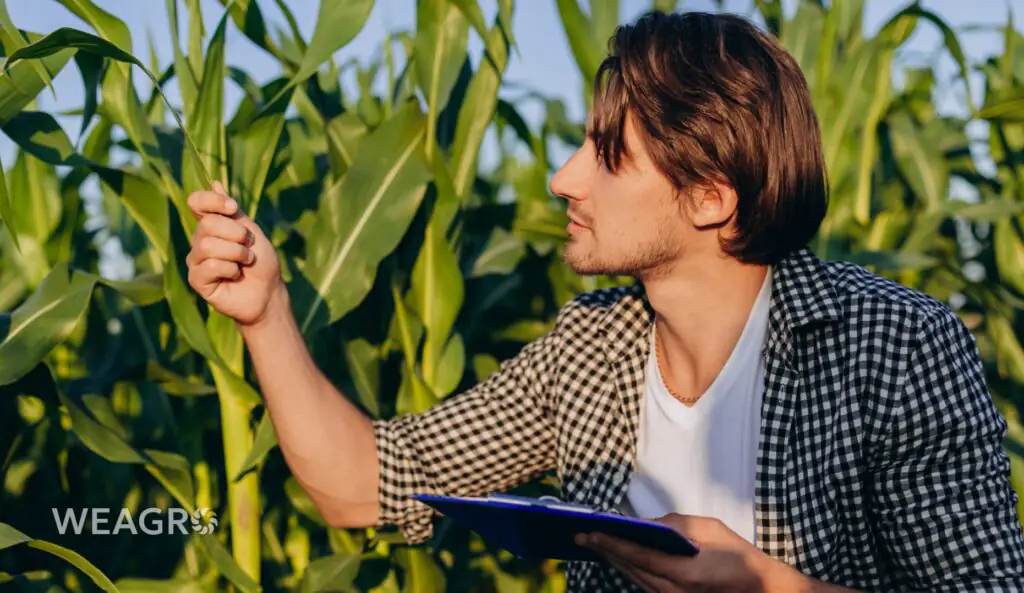
Harvesting and Factory Processing: The Path to the Perfect Kernel
Harvesting seed corn differs significantly from commercial corn. We harvest corn on the ear at 30–35% moisture. This avoids embryo damage, which is inevitable during field shelling at low moisture. Only maternal rows are harvested. Paternal lines are destroyed 10-14 days after pollination.
Stages at the Seed Corp (Remington Seeds) Facility:
- Ear Drying: The process occurs in chamber dryers under gentle temperature regimes (not exceeding 38-40°C) to avoid “cooking” the embryo and preserve germination energy.
- Shelling and Grading: After drying, ears are shelled and seed enters separators (Delta machines). Here division into fractions by size and shape (flat/round, large/medium) occurs. This is critical for the farmer, as uniform fraction ensures precision planting with the seeder.
- Gravity Tables: Here seed is sorted by specific weight. Heavy, biologically complete seeds are separated from light or pest-damaged ones.
Final Stage: Protection and Quality Control
Seed treatment is creating “armor” for the seed. In Cimbria-type machines, a complex cocktail of fungicides, insecticides, and polymer dyes (Thiamethoxam + Metalaxyl-M + Fludioxonil) is applied to each kernel. Automation controls dosing to the milliliter so that each seed unit receives uniform protection.
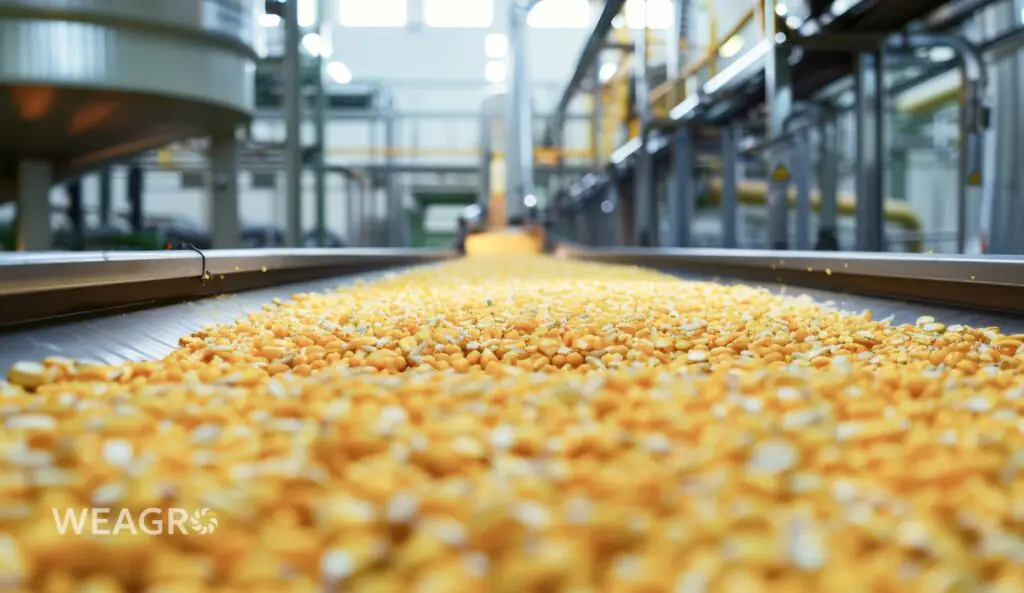
Laboratory Control
No batch leaves the facility without a quality certificate. In the laboratory we verify:
- Germination Energy (on day 4): How quickly and uniformly the seed germinates.
- Germination Rate (on day 7): The percentage of seed that produced normal seedlings. For premium hybrids Drivia, Dalamer, or Gochi, this indicator must be no lower than 95-98%.
Packaging
The final but important stage is packaging. An automated line packages corn seed in three-layer bags, which subsequently protect the planting material from mechanical damage and moisture fluctuations during transportation. Marking of each batch allows tracking the history of each seed—from the parental line in the field to a specific bag in the warehouse.
Hybrid seed production is a process where there are no minor details. Only the synergy of Monsanto genetics, professional agronomic support under irrigation, and high-tech processing at facilities of Remington Seeds level allows Ukrainian farmers to obtain a product capable of competing at the global level.
Thus, post-harvest seed processing is no less important than field cultivation. It is at this stage that the final product quality is formed, which determines its market competitiveness.
Modern technologies of grading, seed treatment, laboratory control, and packaging allow obtaining high-quality hybrid corn seed, fully ready for use in various soil and climatic conditions of Ukraine.