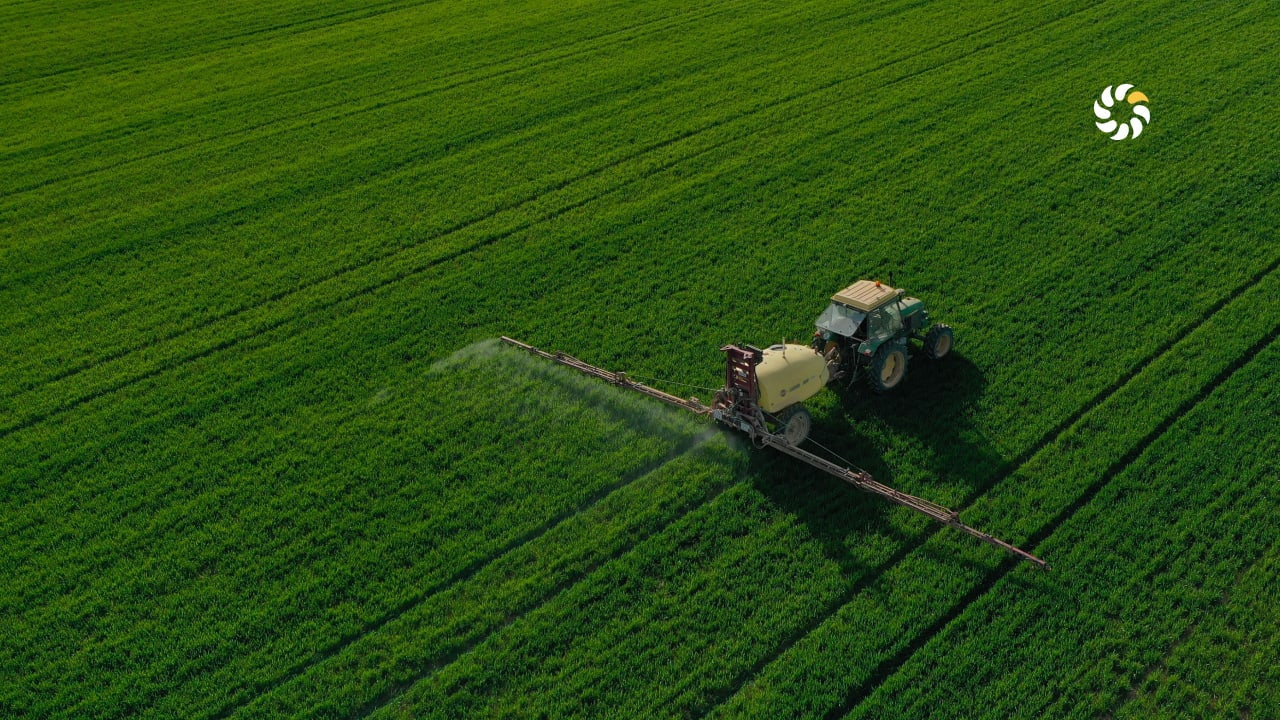
A tractor, combine, seeder, or sprayer may require significant investment, so acquiring agricultural equipment must be evaluated with the farm’s financial capacity over several seasons in mind. What matters is the machine’s cost, its projected utilization, available volume of own funds, future receipts and expenses that the enterprise must finance in parallel.
Different scenarios are available to agricultural producers when funds are insufficient: full payment with own funds, leasing, or attracting financing. Each option creates different pressure on cash flow. That is why you need to compare initial costs, total payment amount, payment schedule, additional costs, and expected economic effect from operating the new machine.
What to Consider Before Acquiring Agricultural Equipment?
First, you need to determine the economic feasibility of the purchase itself. If a tractor will operate 1,500 engine hours per year, the calculation will be one thing. For a machine used a few weeks during the season with low utilization, the ratio of costs to obtained effect will be different.
Acquiring agricultural equipment should be evaluated by the following parameters:
- full cost of the tractor, combine, or other machine;
- available volume of own funds;
- seasonal cash flow of the farm;
- area and projected utilization of agricultural equipment;
- number of engine hours during the year;
- costs for service, maintenance, and repair;
- expected operating period;
- liquidity of the model on the secondary market;
- possible down payment;
- schedule of future payments;
- total cost including the cost of attracted financing.
Productivity must be assessed separately. For example, a new tractor may allow use of a wider implement, faster soil cultivation, and reduced working hours. A new combine may increase daily productivity of the harvest campaign. This result needs to be translated into financial indicators.
The purchase is also compared with the seasonal budget. If after paying for the machine the enterprise will lack funds for seeds, fertilizers, crop protection products, fuel, or repair of other equipment, even an economically justified investment may create a liquidity deficit during a critical period.

Purchasing Agricultural Equipment with Own Funds
Full payment allows immediate registration of the asset as property according to the terms of the transaction and avoids future payments for attracted financing. The farm also does not depend on a multi-year payment schedule for a specific machine.
The main financial question lies in the volume of funds simultaneously withdrawn from circulation. Let us consider a hypothetical example. Suppose a tractor costs 5 million UAH, and the enterprise has 8 million UAH in available funds before the start of the active season. After full payment for the machine, 3 million UAH will remain.
If in the coming months the farm needs to allocate 4.5 million UAH for fuel, fertilizers, crop protection products, spare parts, wages, and other production needs, a gap of 1.5 million UAH arises. In such a situation, savings on the cost of attracted financing may be accompanied by a working capital deficit.
All figures in this example are hypothetical. Its purpose is to demonstrate the impact of the purchase on the enterprise’s liquidity.
Full purchase of agricultural equipment more often has economic justification when the enterprise possesses a sufficient liquidity reserve after paying for the machine. You need to leave a reserve for the production cycle and unforeseen expenses. This is especially relevant before sowing and harvest, when several large budget items are financed almost simultaneously.
Agricultural Equipment Leasing: How It Works and What to Verify
Agricultural equipment leasing allows use of the machine and making payments according to the schedule agreed in the contract. Conditions for acquiring ownership, term of use, and buyout procedure are defined by the specific contract.
Before signing, you need to verify the down payment. A small down payment reduces the initial burden on the budget, but by itself does not show the full cost of the transaction. For correct comparison, you need to sum all payments provided over the entire term.
Fees, insurance, additional payments, early repayment procedure, and buyout conditions are also analyzed. If the farm plans to use the machine over an extended period, you need to understand in advance the mechanism for transfer of ownership after fulfillment of the contract.
The schedule has separate significance. Agricultural equipment under lease is used in a business with pronounced seasonality of receipts, so the same payment amount may affect liquidity differently in different months. A payment after realization of the main part of the harvest and a similar payment during the period of resource procurement create different pressure on cash flow.
When comparing several offers, it is advisable to bring them to the same calculation horizon. You need to account for the down payment, all regular payments, insurance, provided fees, buyout amount, and other costs directly related to the contract.
Agricultural Equipment Financing and Its Impact on Budget
Attracted agricultural equipment financing allows distribution of machine payment over time and retention of part of own capital for production needs. This scenario is especially relevant when the enterprise simultaneously needs to finance equipment and seasonal resource procurement.
Suppose the same hypothetical tractor costs 5 million UAH. With full payment, the farm immediately directs the entire amount to the seller. If the financing terms provide for an initial contribution, for example 30%, at the start 1.5 million UAH is needed, and the rest of the cost is distributed according to the contract. The specific total cost will depend on the rate, term, fees, insurance, and other conditions.
Before signing the contract, you need to verify all these parameters. Special attention is paid to the method of calculating payments, collateral, possibility of early repayment, and costs that arise in addition to the principal amount.
For an agricultural enterprise, the payment schedule needs to be overlaid on the calendar of income and expenses. For example, in March–April significant funds may be needed for sowing, in summer costs for the harvest campaign increase, and main revenue for certain crops arrives after realization of the harvest. If large payments for equipment fall in months of peak financing of field work, the risk of cash shortfall increases.
That is why agribusiness financing must be evaluated through an actual cash flow forecast. The amount of available financing has less practical significance than the enterprise’s ability to fulfill the schedule under baseline and unfavorable season scenarios.
Purchase, Leasing, or Financing: How to Compare Three Options
To choose, you need to run all scenarios through the same criteria. This approach allows you to see the real burden on the enterprise over the entire term of using the financial instrument.
| Criterion | Own Funds | Leasing | Financing |
| Initial Costs | High | Dependent on Down Payment | Dependent on Program Terms |
| Subsequent Payments | Absent for the Purchase Itself | According to Contract Schedule | According to Contract Schedule |
| Impact on Working Capital at Start | Significant | Distributed Over Time | Distributed Over Time |
| Ownership | After Purchase Registration | According to Contract Terms | Depends on Scheme |
| Fees and Financial Costs | Usually Absent for Payment with Own Funds | May Be Provided by Contract | May Be Provided by Contract |
| Insurance | Depends on Operating Conditions and Requirements | Verified by Contract | Verified by Contract |
| Payment Schedule | Absent | Defined by Contract | Defined by Contract |
A minimal down payment does not answer the question of which option is cheaper. An offer with a lower initial payment may provide for a larger total payment amount. Another program may require a larger contribution but have a lower total cost.
Similarly, you need to assess the impact on liquidity. If buying agricultural equipment with own funds is cheaper in total cost, but after the transaction the enterprise will be forced to separately attract capital for procurement of fertilizers or fuel, this consequence must also be accounted for in the financial model.
The comparison must cover the entire payment term and several seasons. Only then does the total cost of each scenario and its alignment with the farm’s projected receipts become visible.
How to Calculate the Advantageous Method for Acquiring Equipment?
For practical calculation, you need to build a separate financial model for each option. Input parameters must be the same: one machine, one price, one projected productivity, and the same period of use.
The algorithm may look like this:
- Determine the full cost of the required machine and related commissioning costs.
- Calculate the available volume of own funds.
- Determine the minimum working capital reserve that needs to be left for the season.
- Obtain specific leasing terms and available financing.
- Calculate the down payment, all payments, fees, insurance, and other costs.
- Build a payment schedule for the entire contract term.
- Compare it with projected receipts and seasonal expenses.
- Calculate the economic effect from using the new machine.
- Determine the payback of the agricultural equipment.
- Repeat the calculation for a scenario with reduced yield, income, or machine utilization.
Let us return to the hypothetical tractor costing 5 million UAH. Under the first scenario, the farm pays the entire amount and immediately reduces its cash reserve by 5 million UAH. Under the second hypothetical scenario, the initial payment is 1.5 million UAH, so at the start an additional 3.5 million UAH remains in circulation. Subsequently, payments arise according to the schedule and costs provided by the contract.
To determine the financial result, you need to add the economic effect of the machine itself. For example, a tractor may replace contractor services, reduce the number of engine hours, increase the area that the farm manages to cultivate in optimal timeframes, or reduce costs per hectare. These indicators are translated into hryvnias per season.
If the hypothetical annual economic effect is 1 million UAH, a simple payback benchmark for a machine costing 5 million UAH will equal approximately five years. A real model must account for service, repair, insurance, depreciation, cost of capital, and residual value of the machine.
The ecosystem of embedded financial solutions for agribusiness WEAGRO combines online services for agricultural installment plans, invoice payment, and payment deferral; WEAGROMARKET operates as a marketplace for agribusiness where goods can be purchased on installment; WEAGROBANK expands farmers’ access to financial products. For a farm, such tools can be considered when planning financing sources together with other available options.
What Mistakes to Avoid When Choosing a Method for Financing Equipment?
One common mistake is comparing offers only by the size of the regular payment. A smaller amount may be the result of a longer payment term, different down payment, or financing structure. To make a decision, you need to know the total amount of all payments.
The calculation also includes the full cost of equipment ownership. After acquisition, a tractor or combine will require fuel, oils, filters, tires, scheduled maintenance, repair, and consumables. Under certain schemes, insurance and other payments provided by the contract are added.
Another risk arises from inflated utilization expectations. If a machine is purchased with the expectation of 1,200 engine hours per year but actually operates 600, fixed costs are distributed over a smaller volume of work performed. The cost per engine hour or cultivated hectare increases, and the payback period lengthens.
It is advisable to verify the financial model under an unfavorable scenario. Lower yield, delayed product realization, or price reduction may reduce seasonal receipts. The farm needs to assess whether sufficient liquidity will remain to fulfill payments and finance field work.
For an enterprise with a sufficient reserve of own capital, full payment may provide an acceptable financial result and absence of further obligations for the purchase. If a one-time withdrawal of a significant amount creates a risk of cash deficit before sowing, harvest, or resource procurement, it is advisable to include leasing and available financing programs in the calculation.
The decision should be made after comparing total cost, payment schedule, seasonal cash flow, ownership costs, and projected machine utilization. Other materials on investment planning, resource procurement, and farm financial management can be found in the WEAGRO blog. Subscribe to updates and bookmark to not miss useful information!