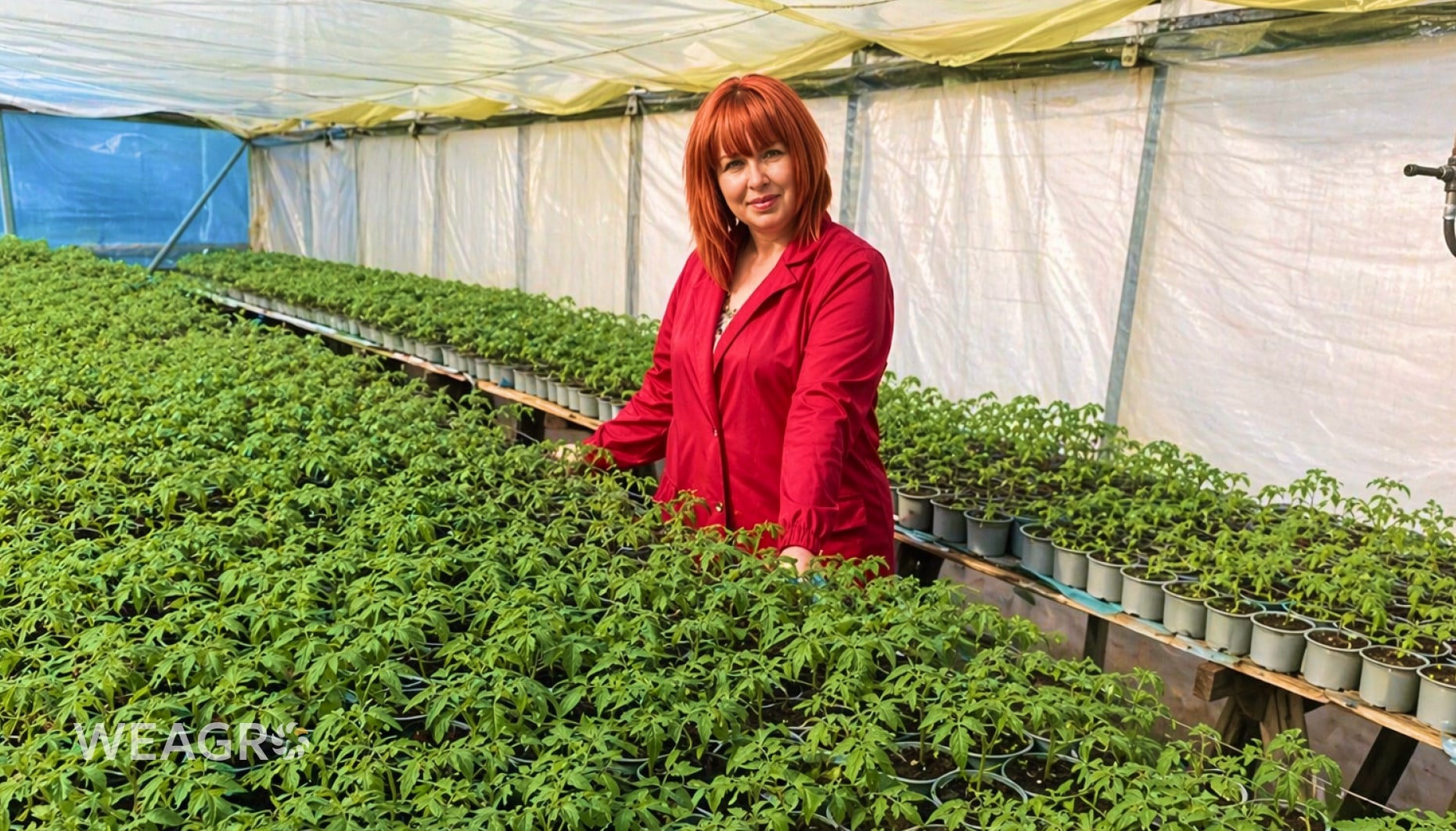
Ukraine’s agricultural sector today is shaped not only by large enterprises but also by personal stories of people who enter farming from completely different professions. One such example is the story of Kharkiv resident Karina Susyk, who after the start of the full-scale war changed her job as a medical representative to growing vegetables in greenhouses and essentially built her own farm from scratch.
Before 2022, Karina worked in the pharmaceutical sector and lived in Kharkiv. After the start of hostilities, she moved with her children to the village of Ternova in the Kharkiv region, where the family sought opportunities for stable income and safer living conditions. It was there that the woman first seriously considered farming and decided to try her hand at growing vegetables.
First Steps in the Agricultural Sector
After the start of hostilities, the family moved to the village of Ternova in the Kharkiv region. According to the farmer, previous experience working with the land was minimal—only helping her parents in the garden. Life in the village and the example of her husband’s family, who had been engaged in greenhouse farming for many years, became the catalyst for change.
“I didn’t plan to go into farming at all. I simply needed to start life over,” she says.
The first seasons were difficult. Part of the harvest was lost to pests, another part due to lack of practical experience. She had to learn literally on the job: reading specialized materials, consulting with other farmers, experimenting with varieties.
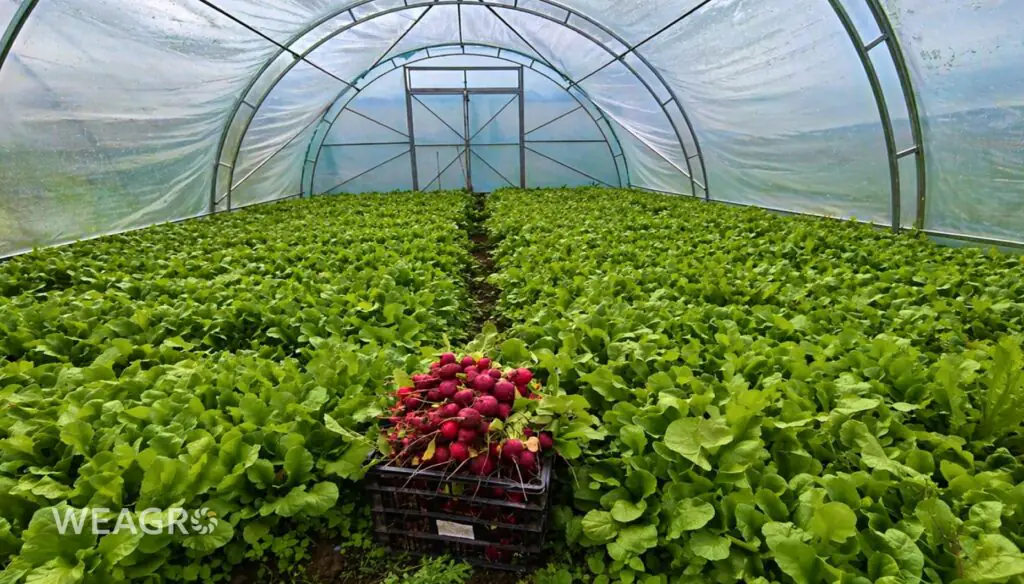
From a small plot, the farm gradually expanded to several land parcels and six greenhouses. The main focus is growing various varieties of greenhouse tomatoes.
“There were many mistakes, but each season brought new understanding of how the land works,” the farmer says.
Continuous learning became the key to stable results.
“Harvested Today—Sold Tomorrow”
Special attention in the farm is given to product freshness. Vegetables reach customers almost immediately after harvest—Karina Susyk sells part of the produce to wholesale buyers in Kharkiv, who supply vegetables to markets, stores, and food establishments. Direct sales through online communities are also used.
This approach allows competing not on volume, but on quality.
“People come back when they know they’ll get a fresh product,” Karina explains.
The greenhouses also employ biological plant protection methods—a modern approach that helps reduce the use of chemical agents and maintain crop stability.
Grants as a Development Tool
Grant programs supporting small businesses became an important stage of development. The funds received allowed investment in greenhouses, equipment, and production expansion.
“Mercy Corps had the first program specifically for agriculture. And it was my largest grant for greenhouses. Thanks to this program, I went to the first women’s agricultural conference in Kyiv, where I was inspired by such women’s businesses and realized that I needed to move forward.
Grants are not a gift. They are an opportunity that must be used correctly,” the farmer notes.
According to her, it was the support that enabled the transition from an experimental farm to stable entrepreneurial activity.
Farming Begins Not with Money—But with Access to Opportunities
Karina’s story is an example of a new generation of Ukrainian farmers: people who come to agriculture from other professions.
Many beginning farmers face questions:
- where to find reliable suppliers;
- how to quickly purchase equipment or materials;
- how to optimize costs;
- whom to trust in the market.
They do not have an agricultural background, but they have: willingness to learn, desire to work, and a need for modern services that simplify the start.
This is where the role of digital services for agribusiness becomes tangible and important.
WEAGRO is an ecosystem that helps farmers work faster and more efficiently:
- conclude purchase and sale agreements with deferred payment;
- securely place orders, conclude contracts, and finance purchases in one place—in the WEAGROMARKET marketplace;
- receive banking services and embedded financing in one digital environment, WEAGROBANK;
- save time searching for partners and gain market access without unnecessary intermediaries.
Essentially, it is a tool that allows farmers to follow a path similar to Karina’s story, but much faster and more efficiently.
Conclusion: New Farming Is About People and Tools
The main lesson of this story is the absence of a perfect moment to start.
“I often recall the saying that before 30 you should save money for a yacht, and after 30—buy seeds. I’m right at that age when I’ve already started buying seeds. When the war ends and we return to peaceful life, maybe I’ll go back to work, I don’t know. But this business will definitely stay afloat, and it will continue to operate,“ the farmer says.
It is precisely the combination of personal motivation and access to the right services that creates results. Stories like this show: farming is no longer a closed sphere—it is becoming accessible to everyone ready to take the first step.
And WEAGRO helps make that step easier.
Source: Suspilne Kharkiv